 sales@sanjiantools.com


 中文简体
中文简体 Deutsch
 Español
What Makes Wire Brush Cleaning Tool Useful For Rust And Dirt Removal
Rust and dirt often stay attached to metal through a combination of surface contact, moisture, oxidation, and accumulated residue. When loose material needs to be removed without taking away a large amount of the underlying metal, mechanical brushing can provide a practical method.
A Wire Brush Cleaning Tool works through repeated contact between thin wires and the contaminated surface. As the brush moves across the workpiece, individual wires reach small areas where loose rust, dirt, flakes, and residue have collected. Repeated movement helps break the attachment between unwanted material and the base surface.
Cleaning results depend on the condition of the surface. Loose rust usually responds more readily to brushing than a firmly attached layer. Dirt that has dried onto a metal part may also loosen through mechanical contact, while greasy or sticky contamination may require another cleaning method before brushing.
Several factors influence the process:
- Wire material
- Wire stiffness
- Brush shape
- Contact angle
- Applied pressure
- Surface condition
- Movement direction
Using greater force does not automatically produce a better cleaning process. Excessive pressure can bend wires, create unnecessary surface marks, or make the tool harder to control. A steady brushing motion with suitable contact allows the wires to work against unwanted material without placing unnecessary stress on the base metal.
For rust removal, surface condition should be considered before choosing a brush. Light oxidation, loose flakes, and heavy attached rust do not present the same cleaning problem. A tool suitable for one condition may be less appropriate for another.
How Does Wire Brush Shape Affect Cleaning Work
Brush shape changes how the wires reach the workpiece. A handheld brush, rotating wheel, cup‑shaped brush, or small detail brush can all use wire filaments, yet each design creates a different working area.
Handheld brushes are useful for local cleaning where the operator needs direct control. Narrow edges, corners, weld areas, and small components can be reached without moving a large tool across the entire surface.
Wheel brushes operate differently because the wires move continuously around a rotating body. Such brushes can cover a wider working path and may be used with suitable equipment for cleaning or surface preparation.
Cup brushes provide another contact pattern. Their shape can cover a broader area while keeping the brush body relatively compact, making them useful around open metal surfaces and certain equipment parts.
Detail brushes focus on smaller areas. Fine wire arrangements can reach grooves, joints, threads, and corners where a wider brush cannot make consistent contact.
Choosing the shape therefore depends on where the unwanted material is located. A large brush is not necessarily suitable for a small recess, while a small detail brush may take unnecessary effort across a broad surface.
When Is a Brass Wire Brush For Rust a Suitable Choice
A Brass Wire Brush For Rust can be considered when the cleaning task calls for relatively gentle contact with the underlying surface. Brass wire has different physical characteristics from steel wire, so it may be selected for applications where a stronger brush could leave unwanted marks.
Such brushes can be useful on certain softer metals and surfaces where maintaining the existing appearance matters. They can also help remove light rust, loose oxidation, and surface dirt without relying on the same level of contact associated with stiffer wire.
Material matching remains important. A brass wire brush is not a universal answer for every rust condition. Thick, firmly attached corrosion may require another treatment approach, especially when mechanical brushing alone would require excessive pressure.
A practical choice can consider three points:
Rust Condition
Loose surface rust may be easier to remove than a hard, firmly attached layer.
Base Material
A softer workpiece may require a more controlled brushing action.
Surface Requirement
Parts intended for later finishing may need careful treatment to avoid unnecessary marks.
Brass wire can also be useful where the cleaning task involves removing residue while keeping the surface relatively unchanged. Proper pressure and movement still matter, since even a softer wire can affect a surface when used aggressively.
How Does Rust Condition Change the Cleaning Method
Rust is not always present in the same form. A thin layer of surface oxidation can behave differently from loose flakes or a strongly attached corrosion layer.
Light surface rust often forms a relatively thin coating. Gentle brushing can loosen the affected material, allowing the underlying surface to become visible again. Loose rust is generally easier to remove because part of the layer has already separated from the base.
Firm rust requires more attention. Increasing pressure may remove material faster, yet excessive force can also affect the base metal. A different preparation method may be more appropriate when corrosion has become thick or strongly attached.
Rust around edges and joints creates another challenge. Brush wires need to reach narrow spaces without losing contact. Smaller brushes can provide better control in such areas, while longer wires may help reach recessed sections.
A useful approach is to inspect the rust before starting:
- Check whether the layer is loose or firmly attached
- Look for corrosion around joints and edges
- Identify the base metal
- Consider whether the surface will receive another treatment later
- Select a brush that can reach the affected area without excessive pressure
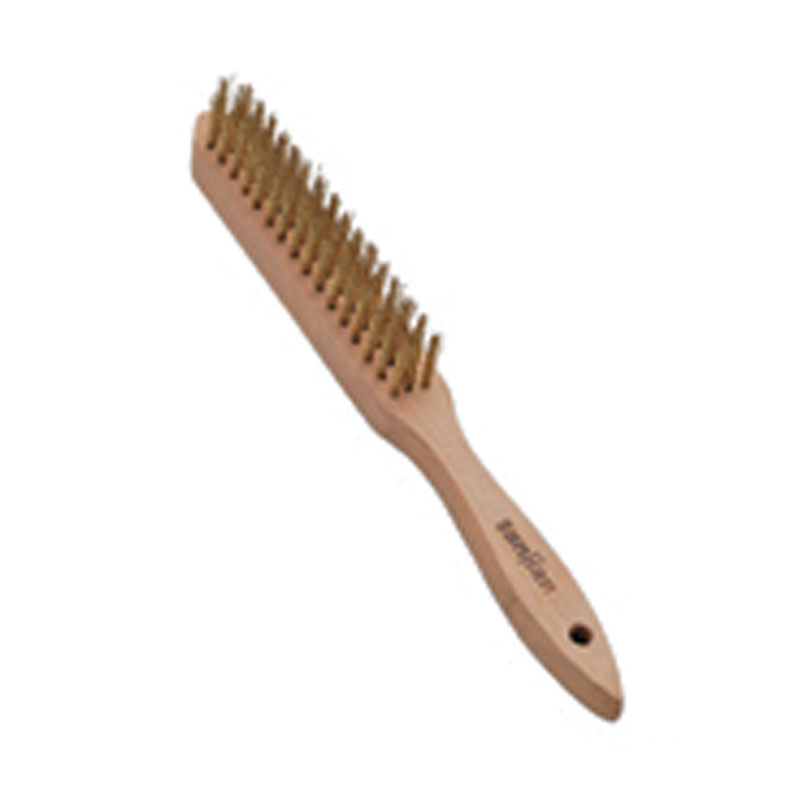
What Types of Dirt Can a Wire Brush Cleaning Tool Handle
A wire brush is mainly useful for contaminants that can be loosened through mechanical contact. Dry dirt, loose particles, surface oxidation, metal residue, and some old deposits can respond well to brushing.
Workshop surfaces may collect dust mixed with small metal particles. Equipment parts can also develop residue around edges, joints, and textured areas. A brush can reach such locations and disturb material that has become attached to the surface.
Welding areas may contain residue that needs to be cleared before another process. In such cases, brushing forms part of a wider surface preparation routine rather than acting as a complete cleaning solution.
Oil and grease require a different approach. A wire brush can spread sticky material across a surface instead of removing it cleanly. Removing or loosening greasy contamination before mechanical brushing can make the later surface treatment easier to control.
Paint also needs careful consideration. Loose paint edges may respond to brushing, while firmly bonded coatings may require another removal method.
How Does Brush Material Affect Metal Surface Cleaning
Wire material changes how a cleaning tool interacts with a workpiece. Steel wire, stainless wire, and brass wire do not behave in exactly the same way, so choosing a brush should start with the surface rather than the appearance of the tool.
Steel wire can provide firm mechanical contact for rust, residue, and other deposits on suitable metal surfaces. Stainless wire may be considered where the surrounding working conditions call for a different wire material. Brass wire offers a gentler contact option for certain applications, particularly where the base material is relatively soft or surface marks need to be limited.
Wire diameter and flexibility also influence the brushing action. A stiffer wire can resist bending during contact, while a more flexible wire can adapt more easily to irregular surfaces. Neither characteristic works independently of the brush design. Wire length, arrangement, and movement all change how contact is distributed.
For a Brass Wire Brush For Rust, the choice should therefore relate to the condition of both the rust and the underlying material. Light oxidation on a softer metal can call for controlled brushing, while firmly attached corrosion on a harder surface may require another approach.
| Brush Wire Material | Typical Cleaning Use | Surface Consideration |
|---|---|---|
| Steel Wire | Rust, residue, and firm surface deposits | Suitable for compatible hard metal surfaces |
| Stainless Wire | Surface cleaning in specific working conditions | Consider material compatibility and surface finish |
| Brass Wire | Light rust and gentle surface cleaning | Useful for certain softer metals and sensitive surfaces |
| Fine Flexible Wire | Narrow areas and light deposits | Helps control contact on irregular surfaces |
Why Does Surface Material Matter Before Using a Wire Brush
A metal surface should be identified before mechanical brushing starts. Different materials can react differently to the same wire brush, especially when surface appearance or later finishing is important.
Steel surfaces may tolerate firmer brushing for certain cleaning tasks. Aluminum and other softer metals require more care because aggressive contact can leave visible marks. Stainless surfaces can also have appearance requirements that make brush selection important.
Coated surfaces create another concern. A brush can remove loose coating material, although firmly attached coating should not automatically be treated in the same way as loose dirt or rust. Brushing may change the surface texture or expose the underlying material.
A simple check can prevent unnecessary surface damage:
- Identify the base material
- Check whether a coating is present
- Look at the condition of the rust or dirt
- Consider the intended surface finish
- Choose wire material and brush shape accordingly
Surface preparation often serves as a step before painting, welding, coating, assembly, or inspection. In such situations, leaving the surface in a suitable condition can matter as much as removing the visible contamination.
How Should Pressure and Brush Movement Be Controlled
Pressure affects both cleaning action and brush life. Too little contact may leave unwanted material behind, while excessive force can make the wires bend and wear unevenly.
A steady movement usually gives better control than pressing hard against one small area. For a handheld brush, repeated strokes can gradually loosen surface material. Around corners and joints, shorter movements may make it easier to keep the brush in the intended location.
Brush angle also changes contact. Holding a tool at a suitable angle can allow the wires to reach the affected area without forcing the entire brush body against the workpiece.
For rotating brushes, contact needs additional attention because the wires are already moving at speed. The operator needs to keep the working area controlled and avoid unnecessary pressure against the surface.
A practical brushing process can follow a simple sequence:
- Remove loose dirt before brushing when possible.
- Start with controlled contact.
- Check the surface after a small working area has been cleaned.
- Adjust brush pressure according to the result.
- Clear remaining particles before further treatment.
Such an approach reduces the temptation to solve every cleaning problem through additional force.
What Should Be Checked Before Using a Wire Brush Cleaning Tool
Condition of the brush matters as much as selection. Wires can become bent, worn, loose, or contaminated through repeated use. A damaged brush may create an uneven working pattern and can make surface treatment harder to control.
Before starting, check whether the brush remains firmly assembled and whether the wires are in reasonable condition. A handheld brush should have a secure grip, while a brush used with equipment should be properly fitted before operation.
Work area preparation also matters. Loose particles can become airborne during brushing, so suitable eye and hand protection should be used. Clothing and nearby surfaces may also need protection from displaced debris.
Extra care is appropriate around:
- Narrow gaps
- Sharp edges
- Rotating equipment
- Coated surfaces
- Soft metals
- Areas containing loose particles
A Wire Brush Cleaning Tool should match both the task and the working environment. Selecting a brush only because it removes rust may overlook the condition of the base material or the surrounding workspace.
How Can Rust Removal Be Combined With Later Surface Treatment
Rust removal is often part of a larger maintenance or surface preparation process. Brushing can loosen corrosion and dirt, making the underlying material easier to inspect. Once loose material has been removed, the surface should be checked again rather than assuming every affected area has been treated in the same way.
Remaining particles may need to be cleared before another coating or finishing step. Moisture also deserves attention because a cleaned metal surface can develop new oxidation when exposed to unsuitable conditions.
For a surface that will receive paint or another protective treatment, preparation can involve several stages:
- Remove loose rust and debris
- Clear remaining particles
- Check for areas with firmly attached corrosion
- Make sure the surface is suitable for the next treatment
- Keep the prepared surface clean before finishing
A Brass Wire Brush For Rust can form part of such preparation where gentler contact is appropriate. Steel wire may be selected for other metal surfaces and cleaning conditions. The right choice depends on the relationship between brush material, rust condition, base metal, and intended finish.
Mechanical brushing also has limits. Heavy corrosion, oily deposits, firmly bonded coatings, and contamination embedded deeply in a surface may require additional treatment. Trying to solve every condition with a wire brush can increase surface wear without addressing the actual source of the problem.
For routine maintenance and localized cleaning, a Wire Brush Cleaning Tool provides a direct way to disturb rust and dirt through controlled physical contact. Brush shape determines access, wire material affects contact, while pressure and movement influence how the surface responds. Matching those factors to the workpiece allows rust and dirt removal to become part of a more controlled surface preparation process.

-
 +86-13906791151
-
 sales@sanjiantools.com
-
 No.1 Xinggong Road, Huangzhai Town, Pujiang County, Zhejiang Province, China


Client
Copyright © Zhejiang Pujiang Sanjian Tools Co., Ltd. All Rights  浙公网安备33072602100309号
Reserved.
浙公网安备33072602100309号
Reserved.

Construction Paint Tools Factory