 sales@sanjiantools.com


 中文简体
中文简体 Deutsch
 Español
How Stainless Steel Wire Brush For Grinder Help With Surface Rust Removal
Rust often begins as a thin change on a metal surface, especially where moisture remains in contact with exposed areas. Loose flakes, powdery residue, and rough patches can gradually build up, making a surface harder to inspect or prepare for another treatment.
Mechanical brushing provides a practical way to remove loose surface material without relying on liquid cleaning agents. A rotating brush can reach areas where a scraper may struggle, including corners, joints, edges, and uneven sections.
Surface condition should be checked before any cleaning starts. A light layer of loose rust presents a different task from corrosion that has already affected the underlying metal. Brushing can remove surface residue, yet deeply damaged areas may require a different repair or preparation method.
A simple inspection can focus on:
- Whether rust is loose or firmly attached
- Whether the base metal remains intact
- Whether paint or another coating is still present
- Whether the surface contains deep pits or damaged areas
- Whether nearby sections can tolerate mechanical brushing
Cleaning also has an inspection benefit. Once loose rust and dirt have been removed, the actual condition of a metal surface becomes easier to see. Hidden cracks, rough areas, damaged coatings, or deeper corrosion may become more noticeable during preparation.
For maintenance work, brushing should therefore be treated as a surface preparation step rather than a way to restore damaged metal.
How Does a Stainless Steel Wire Brush Work on Rust
A Stainless Steel Wire Brush For Grinder uses rotating wire bristles to contact the work surface. As the grinder moves, individual wires strike and sweep across loose rust, dirt, scale, and other unwanted residue.
Unlike a flat abrasive sheet, wire bristles can move around small surface irregularities. Such flexibility makes a brush useful around corners, seams, raised edges, and other areas where a flat tool may have limited contact.
Working pressure has a direct effect on brushing behavior. Light contact allows the bristles to move across the surface while removing loose residue. Excessive pressure can bend the wires more heavily, increase wear, and create unnecessary contact with the base material.
Movement also matters. Holding a rotating brush in one place for too long can concentrate contact on a small area. Moving the grinder steadily across the surface generally provides more even cleaning.
Wire brushing can differ from scraping or sanding in several practical ways:
- Scraping relies on a harder edge contacting the surface.
- Sanding removes material through an abrasive surface.
- Wire brushing uses flexible metal wires to loosen surface residue.
Selection should depend on the condition of the workpiece. A brush intended for loose rust may not be appropriate where significant material removal is required.
Which Surfaces Are Suitable for Wire Brush Cleaning
Metal surfaces with uneven shapes often benefit from the flexibility of wire bristles. Corners, welded joints, narrow edges, curved sections, and textured areas can collect rust and dirt that are difficult to remove with a flat cleaning tool.
A rotating brush can reach many of those locations through direct contact. Operators still need to consider the condition of coatings and the material underneath because mechanical brushing can affect more than rust.
Suitable applications may include:
- Removing loose rust from exposed steel surfaces
- Cleaning around joints and edges
- Preparing old metal before repair work
- Removing loose paint or surface residue where appropriate
- Cleaning areas that are difficult to reach with flat tools
Painted surfaces require extra care. Brushing may remove loose coating along with rust, which can be useful during preparation, although sound coating should not be removed without a clear reason.
Thin metal also needs attention. Excessive pressure can create unwanted surface marks, especially where the material has limited thickness. A gradual approach allows surface condition to be checked before stronger contact is introduced.
What Should Be Considered When Choosing the Brush
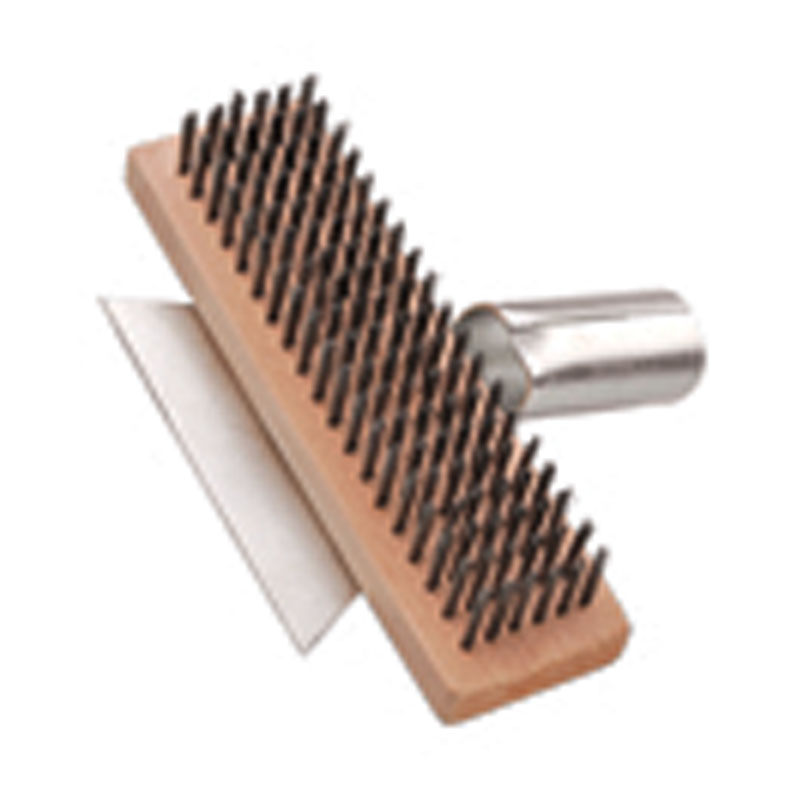
Brush selection should start with the workpiece and cleaning task rather than the appearance of the brush. Wire material, stiffness, shape, size, and mounting arrangement all influence how a rotating brush behaves.
Stainless steel wire can be considered where compatibility with particular metal surfaces and resistance to rust on the brush itself are relevant. Wire thickness also changes brushing behavior. Thinner wires can offer more flexibility, while heavier wires provide a firmer contact.
Brush shape affects access. A cup‑shaped brush can cover a broad working area, while other forms may provide better access around edges or confined sections.
| Brush Consideration | Practical Effect |
|---|---|
| Wire Material | Affects Surface Compatibility and Brush Condition |
| Wire Thickness | Influences Flexibility and Contact |
| Brush Shape | Determines Access to Different Surfaces |
| Mounting Size | Needs to Match the Grinder |
| Workpiece Material | Helps Determine Suitable Brush Choice |
| Surface Condition | Indicates the Required Cleaning Approach |
Compatibility with the grinder is also important. Mounting parts need to fit securely, and the brush should be suitable for the equipment being used.
A brush that is too aggressive for a delicate surface may leave unnecessary marks. A brush that is too light for firmly attached residue may require excessive working time and pressure. Matching the brush to the task helps avoid both situations.
How Does Grinder Speed and Pressure Affect Cleaning
Grinder movement changes how wire bristles contact a surface. Controlled movement allows contact to spread across a working area, while excessive pressure can force the wires to bend sharply against the metal.
More pressure does not necessarily mean faster or cleaner work. Heavy contact can wear bristles sooner and may affect the underlying surface. A moderate approach gives the operator a better opportunity to observe how rust is being removed.
Working position matters as well. Holding the tool at an awkward angle can make contact uneven and increase the chance of catching an edge. Keeping movement controlled makes the brushing process easier to manage.
Before starting, several basic checks are useful:
- Inspect the brush for damaged or loose wires.
- Confirm that mounting is secure.
- Check the workpiece for loose parts or unstable sections.
- Start with controlled contact.
- Observe the surface as residue is removed.
- Stop when the required preparation has been reached.
Once loose rust has been removed, continuing to brush aggressively may provide little additional benefit. A clean surface should be inspected rather than repeatedly worked without a specific purpose.
How Can Wire Brush Cleaning Be Used in Surface Preparation
Rust removal is often only one stage of metal maintenance. Once loose corrosion, dirt, and old residue have been cleared, the surface can be checked more easily for damage that was hidden underneath.
A Stainless Steel Wire Brush For Grinder can be useful around joints, corners, edges, and uneven sections where residue tends to remain. Welded areas can also collect surface contamination, making careful brushing helpful during preparation work.
For coating or repair work, surface preparation needs to match what comes next. Removing loose material may be enough for a minor maintenance task, while a damaged surface may need additional treatment before a new coating or repair layer is applied.
A practical sequence can be kept simple:
- Inspect the metal before brushing.
- Remove loose dirt and rust.
- Check corners and joints separately.
- Wipe away remaining residue.
- Inspect the exposed surface.
- Decide whether additional preparation is needed.
Surface inspection should not stop when visible rust disappears. Dark marks, pits, cracks, thin sections, or damaged coating may still require attention.
Brushing can also be useful during maintenance inspections because cleaning a small area may reveal the condition of metal underneath accumulated residue. Such work is especially helpful around connections and exposed edges, where moisture can remain for longer periods.
What Quality Factors Matter When Producing Steel Wire Brushes
A wire brush needs consistent construction because each brush is expected to rotate evenly while its wires contact a working surface. Uneven wire placement can affect balance and may cause irregular contact during use.
Wire condition is another consideration. Individual wires need suitable attachment to the brush body so that normal working movement does not cause premature separation.
A production inspection may focus on:
- Wire attachment
- Wire consistency
- Brush shape
- Mounting area
- Balance during rotation
- Surface condition of the brush body
For a China Steel Wire Brush manufacturer, production consistency can depend on material selection, forming, assembly, and inspection. Different brush designs may also require different arrangements of wires and mounting structures.
Brush balance deserves particular attention when a product is intended for rotating equipment. Uneven construction can influence vibration, making proper assembly and inspection important before the brush reaches the user.
Wire stiffness also needs to match the intended task. A brush designed for light surface cleaning may use a different wire arrangement from one intended for heavier residue. Using the same construction for every application would not necessarily provide suitable contact.
Storage can influence brush condition as well. Excessive moisture, pressure on the wires, or careless handling may deform the brush before use. Keeping brushes in a clean and dry location helps preserve their original shape.
What Safety and Maintenance Practices Should Be Followed
Rotating wire brushes require careful handling because individual wires can break or become detached during use. Inspection before operation gives an opportunity to identify visible damage.
A brush should be checked for bent sections, loose wires, cracks, or damage around the mounting area. Grinder compatibility also needs confirmation before installation.
Personal protection is important during mechanical cleaning. Suitable eye and face protection can help guard against flying particles, while appropriate clothing and hand protection can reduce exposure to loose debris.
During operation, hands should remain away from the rotating brush. Nearby materials should also be secured so that vibration or contact does not move them unexpectedly.
A few practical habits can make routine work easier:
- Inspect before mounting. A damaged brush should not be installed simply because the damage appears minor.
- Secure the workpiece. Stable material gives better control during brushing and reduces unexpected movement.
- Use controlled pressure. Heavy pressure can increase wire wear and may damage the surface being cleaned.
- Watch the brush during use. Unusual vibration, sound, or visible changes call for stopping and checking the equipment.
- Clean after use. Removing accumulated dust and residue makes later inspection easier.
- Store properly. Avoid placing heavy objects against the wire section, as pressure can deform the bristles.
A China Steel Wire Brush used with a grinder should be treated as a rotating maintenance tool rather than an ordinary hand brush. Brush condition, mounting, grinder compatibility, workpiece stability, and operator control all influence the working process.
Rust removal also needs a realistic goal. Loose surface corrosion can often be cleared through mechanical brushing, while deeply damaged metal requires closer inspection and possibly another form of treatment. Once a surface has been cleaned, checking its actual condition is more useful than continuing to remove material without a clear purpose.
For maintenance teams and metalworking operations, careful brush selection and controlled use can make surface preparation easier to manage. Material condition, brush construction, grinder setup, and working technique remain closely connected throughout the process.

-
 +86-13906791151
-
 sales@sanjiantools.com
-
 No.1 Xinggong Road, Huangzhai Town, Pujiang County, Zhejiang Province, China


Client
Copyright © Zhejiang Pujiang Sanjian Tools Co., Ltd. All Rights  浙公网安备33072602100309号
Reserved.
浙公网安备33072602100309号
Reserved.

Construction Paint Tools Factory