 sales@sanjiantools.com


 中文简体
中文简体 Deutsch
 Español
What Is Drywall Putty Knife Set Used For In Construction Work
Wall finishing often decides how a space finally looks and feels. Before paint or coating becomes visible, surface condition already carries small details from earlier work. Uneven plaster, minor cracks, or leftover material marks can remain after installation or repair work, especially on large wall areas where hand finishing is still widely used.
In many construction sites, surface preparation is not treated as a single step. It usually appears in layers. First layer fills gaps, next layer smooths uneven sections, and final stage adjusts small imperfections that become visible under light. Without this sequence, wall surfaces may show irregular texture after finishing materials are applied.
Manual tools still remain part of this process because machine finishing does not always reach corners, edges, or narrow sections near structural joints. A simple hand tool often becomes more practical when precision matters more than speed.
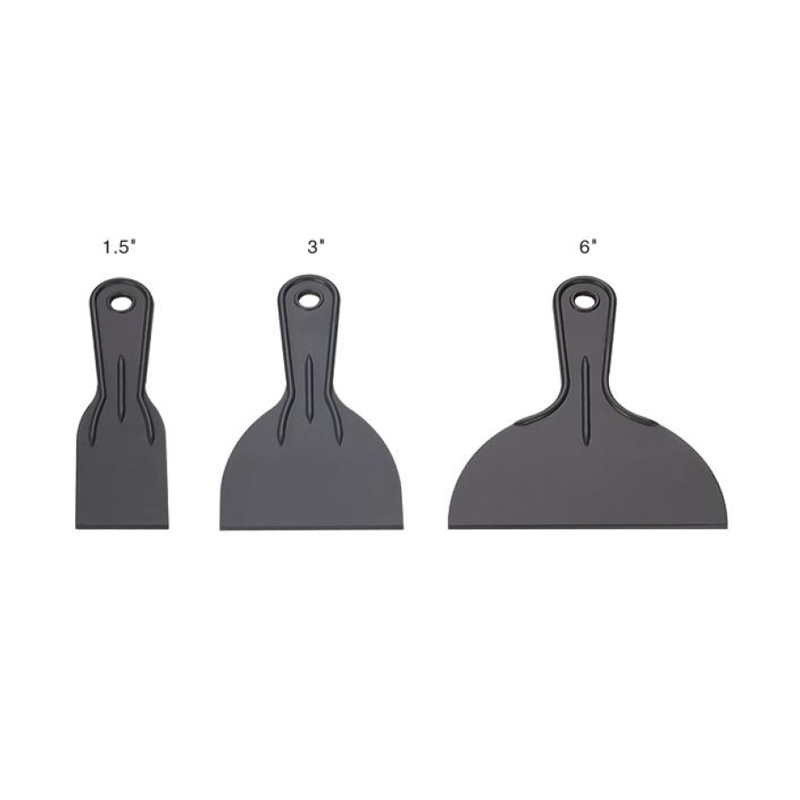
A Drywall Putty Knife Set is commonly used in these stages because wall conditions rarely stay uniform. One section may need wide spreading, while another area requires narrow correction. Having different blade widths in one set allows adaptation to surface changes without switching tools repeatedly.
Common surface issues during construction include:
- Uneven plaster thickness after application
- Small cracks near joints or edges
- Residual marks from earlier scraping work
- Dust or loose particles affecting adhesion
Each of these conditions affects how smoothly later finishing layers can be applied.
What Makes Drywall Putty Knife Set Common in Wall Finishing Work
A putty knife set usually contains multiple blade sizes and flexible edges designed for different wall conditions. Wider blades help cover large flat areas, while narrower blades reach corners or tight sections where control becomes more important than coverage.
Blade flexibility plays a practical role. A slightly flexible edge can follow uneven surfaces without leaving deep marks, while a stiffer blade helps control pressure when leveling thicker material layers. This balance allows one set to handle different finishing stages.
In real construction work, wall surfaces rarely stay consistent from top to bottom. Structural movement, material differences, and earlier repair patches often create variation. Instead of changing tools repeatedly, different blades within one set handle these variations naturally.
How Drywall Putty Knife Set Works During Filling and Smoothing
Application process usually begins with spreading material across uneven wall sections. Material fills cracks or low areas, then blade movement helps distribute it evenly across surrounding surface. Movement direction often changes depending on wall condition, not fixed pattern.
After initial filling, smoothing stage removes excess material. Blade angle becomes important here. Slight tilt helps reduce thick buildup while keeping surface level. Repeated passes may be needed for areas where material settles unevenly.
Simple working pattern often follows three steps:
- Apply filling material to uneven section
- Spread evenly across nearby surface
- Smooth final layer by controlled scraping
Each step depends more on surface response than fixed technique.
Why Blade Material and Edge Design Affect Work Quality
Blade surface quality influences how material moves during application. Smooth edge contact reduces dragging marks, while uneven edges may leave visible lines on fresh material. Flexibility also affects how blade adapts to curved or irregular surfaces.
Metal durability becomes important during repeated scraping. Construction environments involve constant use on rough surfaces, so blade edge must maintain shape after multiple cycles.
| Blade Characteristic | Practical Effect | Construction Result |
|---|---|---|
| Flexible edge | Adapts to uneven surface | Smoother leveling |
| Stiffer edge | Strong pressure control | Better flat surface correction |
| Smooth finish | Reduced drag marks | Cleaner surface appearance |
| Worn edge | Irregular movement | Uneven finishing lines |
Putty Knife Manufacturer process often focuses on these details during forming stage, since edge consistency directly affects how tool behaves on real wall surfaces.
What Role Handle Design Plays in Construction Efficiency
Handle structure affects how long a tool can be used comfortably during continuous wall work. A balanced grip reduces strain when working on vertical surfaces, especially when arm position stays raised for extended time.
Grip texture also helps control movement when material becomes slippery or wet. Stability during pressure adjustment allows smoother transitions between spreading and leveling stages.
In practical use, handle comfort becomes noticeable during long finishing sessions rather than short tasks.
How Different Construction Stages Use Putty Knife Sets
Wall finishing does not happen in a single step. Early stage often focuses on filling cracks or repairing damaged areas. Middle stage adjusts uneven surfaces, while final stage prepares wall for painting or coating.
Different blade sizes support each stage naturally:
- Wide blade for large wall leveling
- Medium blade for general smoothing
- Narrow blade for corners and joints
Each stage requires different level of control rather than same movement pattern.
Why Surface Condition Before Application Influences Final Result
Wall surface rarely starts in a fully uniform state. Even after plastering or repair work, fine dust, weak bonding areas, or slightly raised patches can remain. Once finishing material touches such surface, spread behavior changes immediately. Some areas absorb more material, while others resist movement of blade pressure.
Dryness level also plays a quiet role. A surface holding hidden moisture may slow down setting speed, creating uneven texture after smoothing. Dust layers act like a barrier, reducing adhesion between wall and filler material, which later appears as patchy finishing once drying begins.
Preparation in real work often follows a simple order rather than strict procedure:
- Loose dust removal from wall face
- Light check of cracked or hollow spots
- Basic leveling of rough zones
- Surface kept stable before application starts
Small differences at this stage often decide how much correction work appears later, especially under side lighting where uneven texture becomes clearer.
How Working Environment Affects Tool Selection
Construction settings shift from one site to another, and wall finishing tools respond differently depending on space and air condition. Indoor renovation spaces usually feel narrow, with furniture, edges, and limited movement range. Control during application becomes more important than coverage speed in such surroundings.
Open construction areas allow wider movement, though surface scale increases workload. In that case, broader blade contact helps cover larger sections without frequent interruption.
Air condition also influences material behavior. Moist surroundings may keep filler soft for longer time, while dry air may cause faster surface setting. Each condition changes how blade pressure behaves during smoothing.
| Site Condition | Surface Behavior | Tool Response |
|---|---|---|
| Narrow indoor space | Limited movement area | Smaller blade control |
| Large open wall | Wide application surface | Broader blade coverage |
| Humid air | Slow setting material | Gradual smoothing passes |
| Dry air | Fast surface setting | Quick leveling adjustment |
Drywall Putty Knife Set fits into these variations because multiple blade sizes allow switching between control and coverage without changing working method.
What Role Putty Knife Manufacturer Plays in Tool Quality
Tool performance depends strongly on how consistently each component is formed during production. Blade flatness, edge alignment, and handle positioning influence movement across wall surface during real work conditions.
Slight unevenness along blade edge may appear as visible streaks after smoothing layer dries. Handle misalignment can shift pressure direction, making control less stable during repeated strokes. These small variations become more noticeable when finishing large wall areas where repetition is continuous.
Production focus in Putty Knife Manufacturer process often includes:
- Maintaining uniform blade thickness across batches
- Refining edge smoothness for stable contact
- Aligning handle position with blade center
- Keeping balance between flexibility and stiffness
Even small improvements in these areas influence how steady finishing movement feels during wall application work. Construction environments do not forgive inconsistency easily, since repeated motion amplifies small structural differences.
How Proper Tool Maintenance Supports Repeated Construction Use
After finishing work, blade surface usually carries thin layers of dried material. Once left unattended, residue hardens and affects smooth sliding during next use. Cleaning soon after work helps preserve blade condition without extra effort.
Storage method also plays a quiet role. Tools placed under pressure or stacked incorrectly may develop slight edge deformation over time. Moist environment may also affect metal surface condition, reducing smooth contact with wall material in later use.
Simple maintenance habits commonly include:
- Immediate removal of leftover material after work
- Light cleaning of blade edge and surface
- Dry storage away from moisture exposure
- Avoiding heavy pressure on blade edge during storage
Regular attention to these steps helps maintain steady performance across multiple projects, especially in repeated construction cycles where tools are used continuously.
Wall finishing relies on surface condition, material behavior, tool structure, and working environment working together rather than separately. Drywall Putty Knife Set remains common because wall surfaces rarely follow one pattern. Different blade sizes allow adjustment across filling, leveling, and final smoothing stages without changing overall workflow.
Construction work often depends on small repeated actions rather than single large steps. When blade control, surface preparation, and maintenance stay consistent, finishing result becomes more stable across different wall conditions and project types.

-
 +86-13906791151
-
 sales@sanjiantools.com
-
 No.1 Xinggong Road, Huangzhai Town, Pujiang County, Zhejiang Province, China


Client
Copyright © Zhejiang Pujiang Sanjian Tools Co., Ltd. All Rights  浙公网安备33072602100309号
Reserved.
浙公网安备33072602100309号
Reserved.

Construction Paint Tools Factory