Industrial maintenance covers a lot of small but important cleaning jobs. Workers may need to deal with oxidation, light rust, dirt, paint residue, burrs, carbon deposits, or buildup around machine parts. The tricky part is getting the unwanted material off without damaging the surface underneath. That is where choosing the right wire brush starts to matter.
A Wire Brass Brush is commonly used when a job calls for a more controlled brushing action. Brass wire is softer and more flexible than many steel wire options, so it can work well on softer metals, finished surfaces, electrical parts, and other components where deep scratching is a concern.
Demand for brass wire brushes comes from many maintenance areas, including manufacturing, automotive service, electrical work, woodworking, metal fabrication, and general equipment repair. For B2B buyers, the brush isn't just a basic hand tool. Wire diameter, trim length, brush shape, wire density, and handle or mounting style can all change how it behaves on the actual workpiece.
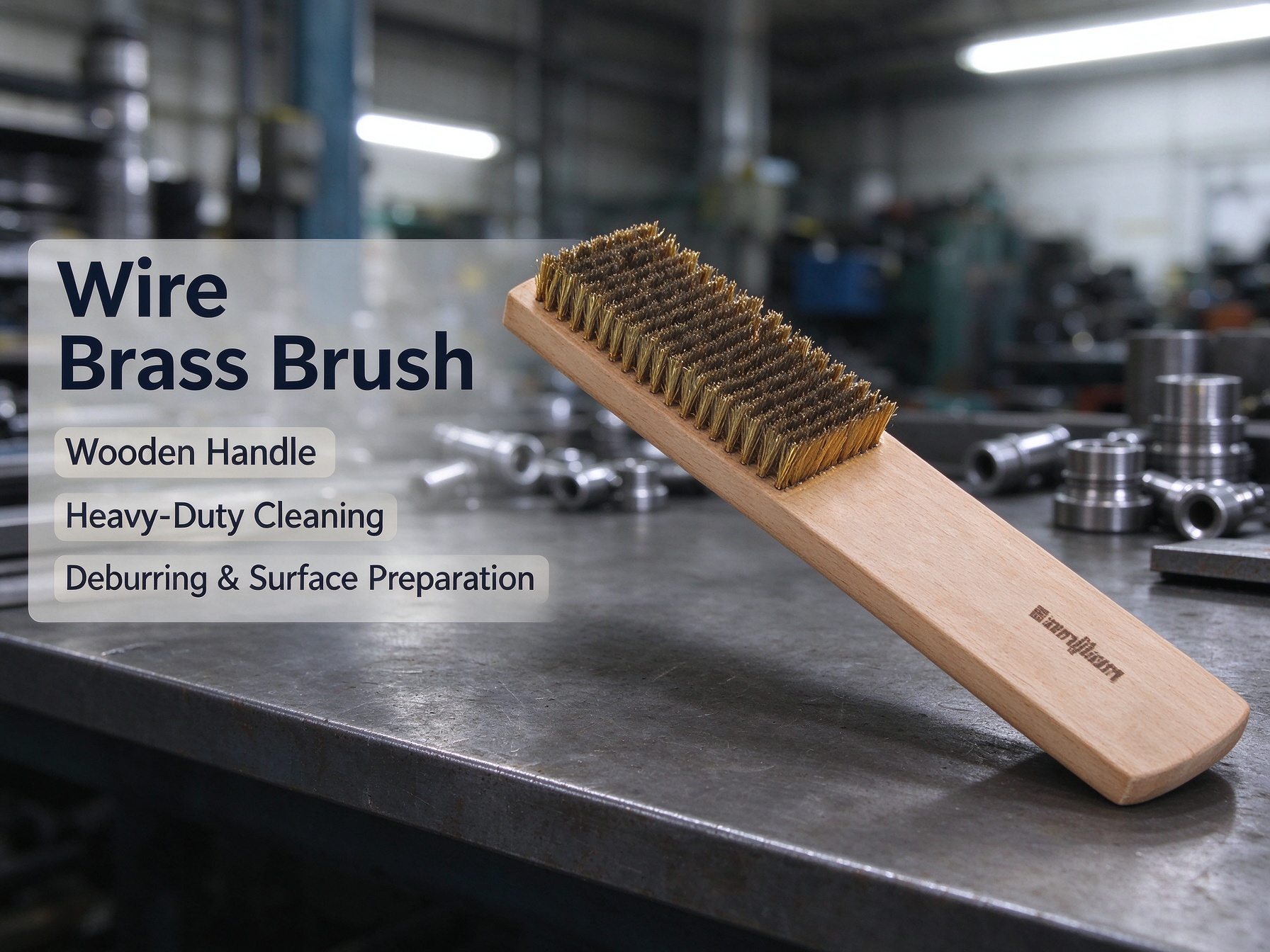
Why Brass Wire Is Useful for Industrial Maintenance
The wire itself has a big effect on brush performance.
Brass wire is relatively soft and flexible when compared with many steel wire types. It can remove loose oxidation, dirt, and surface residue while giving the operator a less aggressive brushing action.
That makes it useful for maintenance jobs where cleaning is needed but removing too much of the base material would be a problem.
Typical reasons for selecting brass wire include:
- Lower aggressiveness on some surfaces
- Controlled removal of light contamination
- Flexibility when brushing uneven or irregular areas
- Suitability for certain softer metals and delicate components
- Availability in several brush shapes and formats
Of course, brass wire isn't the answer for every cleaning job. Heavy scale, thick rust, or strongly bonded deposits may call for a steel wire brush or another cleaning method. The workpiece and the result you need should guide the choice.
Which Industrial Applications Use Wire Brass Brushes?
Brass wire brushes show up in quite a few maintenance activities. Some are routine cleaning jobs, while others involve surface preparation or restoring parts before they go back into service.
| Application |
Typical maintenance task |
Why brass wire can be suitable |
| Electrical equipment |
Cleaning contacts and terminals |
Controlled brushing on sensitive components |
| Automotive repair |
Cleaning parts and threads |
Removes deposits with moderate aggressiveness |
| Metal fabrication |
Light surface preparation |
Helps clean surfaces before finishing |
| Machine maintenance |
Removing dirt and oxidation |
Useful for regular cleaning |
| Woodworking |
Texturing and cleaning wood |
Can provide a softer brushing effect |
| Plumbing and fittings |
Thread and fitting cleaning |
Helps clean without heavy cutting action |
| Marine equipment |
Light corrosion removal |
Useful for controlled surface cleaning |
| Tool maintenance |
Cleaning tools and parts |
Can remove residue from many surfaces |
These are common uses, but actual suitability still depends on the material, coating, contamination, and the finish that needs to remain after brushing.
Electrical Maintenance Is an Important Use Case
Electrical maintenance is a good example of why brush aggressiveness matters.
Technicians may clean terminals, connectors, battery components, grounding points, switchgear parts, and similar conductive surfaces. Oxidation and dirt can affect contact quality, so a controlled cleaning method can be useful.
A brass wire brush can remove loose contamination and surface oxidation from suitable components without the harder cutting action of some steel brushes.
That doesn't mean a brass brush should be used carelessly on electrical equipment. Energized equipment requires proper safety procedures, and maintenance work should follow the equipment manufacturer's instructions and applicable electrical practices.
Brush size also matters in this market. Small end brushes, narrow hand brushes, and toothbrush-style designs can be easier to handle around terminals, grooves, and tight spaces. For distributors, having several compact brush formats can be more useful than offering one standard size.
Automotive Maintenance Creates Regular Demand
Automotive repair shops use wire brushes for all kinds of cleaning and preparation work.
Typical tasks include cleaning threads, removing carbon deposits, getting dirt off metal parts, and preparing components for inspection. Brass wire can be a useful option when the surface needs to be cleaned without heavy abrasion.
It may also suit softer metals or components where deep marks could create a fitting or appearance issue.
The brush shape often matters just as much as the wire. A narrow brush can work around threads and grooves, while a wider hand brush makes more sense for larger surfaces.
There are also machine-mounted brass brushes for repeated cleaning operations. In a busy workshop or production environment, using the same brush setup across a repeated task can save handling time.
Brass Wire Brushes Have a Role in Metal Fabrication
Fabrication shops regularly clean metal surfaces before welding, coating, painting, or inspection.
A brass wire brush can help remove loose contamination, light oxidation, and residue from suitable materials. When the surface has heavy scale, thick rust, or stubborn welding residue, a different brush may be needed.
The material being worked on matters a lot here.
For example, when cleaning aluminum, a fabricator may want to avoid using a brush that has already been used on carbon steel because of possible cross-contamination. Keeping dedicated brushes for different materials can therefore be part of a shop's normal maintenance practice.
For B2B buyers, it's worth asking whether a brush is intended for one material or a wider mix of workpieces. That small detail can affect how the product is handled in the field.
Thread Cleaning Is a Small Task With a Practical Need
Threads are easy places for dirt, rust, old sealant, and other residue to collect.
Cleaning them by hand may seem like a minor job, but when the same task is repeated across a large number of parts, it takes time. A brass wire brush can provide enough brushing action to clean suitable threads without the heavier cutting effect of a harder wire.
Common examples include:
- Bolts and threaded fasteners
- Pipe fittings
- Mechanical connections
- Valve components
- Automotive parts
- Industrial maintenance hardware
Brush size should match the component. A brush that is too large can be awkward to control, while one that is too small may turn a simple cleaning job into a slow one.
Plumbing and Pipe Fitting Maintenance
Plumbing contractors and industrial maintenance teams also use wire brushes when cleaning fittings and connection areas.
A brass brush may be used on suitable metal fittings, threads, soldering areas, and other surfaces before assembly or repair. It can help remove oxidation and residue without cutting heavily into the working surface.
Again, material compatibility is important. The goal isn't to make the surface look polished for its own sake. It's to clean the part while keeping the dimensions and functional areas in proper condition.
For plumbing distributors, different brush widths, handle designs, and compact formats can help cover repair, maintenance, and installation jobs without forcing customers into one brush type.
Woodworking Is Another Market for Brass Wire Brushes
Wire brushes aren't limited to industrial metal cleaning.
In woodworking, brushing tools can be used to change the surface texture of wood. By removing softer fibers, the harder grain can become more noticeable and create a textured finish.
Brass wire gives a different brushing action from steel wire and can be chosen when a gentler effect is needed.
This can be relevant for products such as:
- Decorative wood panels
- Furniture components
- Flooring
- Interior architectural products
- Reclaimed wood finishes
The right brush can vary with wood species, machine speed, brushing pressure, and the texture the manufacturer wants to create. A company supplying tools for woodworking production may therefore need several wire sizes or brush configurations for different lines.
Marine and Outdoor Equipment Maintenance
Marine equipment faces moisture, salt, and corrosion-related contamination on a regular basis.
Brass wire brushes can be useful on suitable fittings, hardware, tools, and maintenance components when a controlled cleaning action is needed.
But the surrounding environment brings a few extra things to think about. Handle material, wire construction, storage conditions, and resistance to deformation can all affect product life.
For distributors serving marine maintenance users, clear application guidance is helpful. Customers shouldn't have to guess whether a particular brass brush is appropriate for a certain metal just because the product is described as corrosion-resistant or gentle.
How Brush Design Affects Industrial Performance
Wire material gets plenty of attention, but the brush itself also makes a difference.
Wire diameter is one of the main variables. Thinner wire is usually more flexible and can provide a softer brushing action. Thicker wire tends to feel stiffer and provides more mechanical force.
Trim length changes the way the wires move too. Longer trim can follow uneven surfaces more easily, while shorter trim gives a firmer brushing feel.
Wire density affects how much brush material contacts the workpiece at one time.
| Brush specification |
General effect |
| Thin wire |
More flexible brushing |
| Thick wire |
More aggressive action |
| Long trim |
Better conformity to uneven surfaces |
| Short trim |
Stiffer brushing action |
| Higher density |
More wire contact per area |
| Lower density |
More open brushing action |
These are general tendencies, not fixed rules. Alloy, brush construction, machine speed, applied pressure, and workpiece material can all change the actual result.
Machine-Mounted Brass Wire Brushes Support Repetitive Work
Not every industrial cleaning task is done by hand. Some factories use brushes with drills, grinders, automated machinery, or dedicated brushing equipment.
Machine-mounted brass brushes can make sense when the same cleaning operation is repeated on a large number of parts.
Here, buyers need to check more than the brush diameter. RPM, arbor size, balance, attachment method, machine compatibility, and operating pressure should all be considered.
An incorrectly matched rotating brush can wear quickly or create unstable operation. For powered applications, manufacturers should provide clear information about operating limits and mounting requirements.
Suitable guarding and personal protective equipment are also part of proper machine use.
Why Wire Diameter Matters for Surface Protection
One reason companies choose brass wire is to control how aggressively the brush interacts with the surface.
A thinner brass wire may work well for light deposits or oxidation where the appearance and condition of the base material need to stay largely unchanged.
A thicker brass wire can provide more brushing force for tougher contamination.
This can be especially relevant when working with softer metals such as aluminum, copper, or brass.
Still, “soft” doesn't mean there is no risk of surface change. Repeated passes, strong hand pressure, high RPM, or long contact time can still affect a workpiece. For an OEM or industrial customer, testing the brush on the actual material is a sensible way to confirm the result.
Non-Sparking Claims Need Careful Evaluation
Brass wire brushes are sometimes promoted for applications where reduced sparking is considered useful. Buyers should be careful about treating this as a blanket safety feature.
Whether a brush is appropriate for a hazardous environment depends on the full tool design, the wire alloy, contamination, impact conditions, surrounding atmosphere, and the requirements of the work area.
A brass wire brush should not simply be assumed safe for every potentially explosive environment.
For B2B purchasing, manufacturers need to provide accurate material information and avoid broad safety claims that aren't supported by testing or application requirements. In hazardous locations, the complete tool, procedure, and workplace conditions need to be evaluated together.
How Quality Control Affects Bulk Brush Orders
When buying a few brushes for maintenance use, small variations may go unnoticed. For a distributor or OEM purchasing hundreds or thousands of pieces, consistency is a much bigger issue.
Changes in wire diameter, trim length, brush density, handle dimensions, or mounting parts can affect how the brush performs from one production batch to another.
A reliable manufacturer should have inspection procedures for the dimensions and assembly features that matter to the product.
Depending on the design, checks may include:
- Wire diameter
- Wire material and alloy
- Brush dimensions
- Trim length
- Wire density
- Handle or base attachment
- Arbor dimensions
- Balance for powered brushes
- Surface and packaging condition
For customized OEM products, approving a production sample before the full run can help catch dimensional or mounting issues early.
What B2B Buyers Should Check Before Sourcing Brass Wire Brushes
The easiest way to start is with the job itself.
Tell the manufacturer what material needs to be brushed, what kind of contamination is present, how the brush will be used, and how often it will run. Those details are much more useful than simply asking for a “soft wire brush.”
Other specifications worth confirming include:
Workpiece material: aluminum, copper, brass, steel, wood, or another substrate.
Cleaning objective: oxidation removal, dirt cleaning, thread preparation, surface texturing, or finishing.
Brush format: hand brush, cup brush, wheel brush, end brush, tube brush, or another design.
Operating method: manual, drill-mounted, grinder-mounted, or automated equipment.
Required dimensions: brush diameter, width, arbor, handle length, and wire trim.
Once the application is clear, it becomes much easier to narrow down the right brush construction.
How Manufacturers Can Support Application-Specific Brush Demand
The wider use of brass wire brushes across different maintenance sectors creates room for more application-specific products.
A distributor may need standard hand brushes for general repair work. An industrial OEM, on the other hand, may need a mounted brush with a fixed arbor size, wire density, and dimensional tolerance.
Depending on the product, customization can cover:
- Wire diameter
- Brush diameter
- Brush width
- Handle material
- Handle shape
- Arbor size
- Wire density
- Packaging
- Private-label branding
The main point is to build the brush around the actual task. A small brush for electrical cleaning has different priorities from a machine-mounted brush used for wood texturing or repeated parts cleaning.
Selecting a Wire Brass Brush for the Intended Maintenance Job
The demand for Wire Brass Brush products comes from many maintenance applications where a controlled brushing action is useful. Electrical cleaning, automotive repair, metal fabrication, plumbing work, woodworking, marine maintenance, and machinery servicing all use brass wire for slightly different reasons.
The wire itself is only part of the selection. Diameter, trim length, density, brush shape, mounting method, and operating conditions can change the way the tool behaves.
For B2B buyers, a practical approach is to match the brush to the material and the cleaning task, then test the sample on the actual workpiece. That gives distributors, maintenance suppliers, and OEM customers a clearer idea of whether the brush will perform consistently in real working conditions, which is far more useful than choosing by wire material alone.
 sales@sanjiantools.com


 中文简体
中文简体 Deutsch
 Español

 +86-13906791151
 sales@sanjiantools.com
 No.1 Xinggong Road, Huangzhai Town, Pujiang County, Zhejiang Province, China


 浙公网安备33072602100309号
Reserved.
浙公网安备33072602100309号
Reserved.
