 sales@sanjiantools.com


 中文简体
中文简体 Deutsch
 Español
Wallpaper Brush in Wall Painting
The wallpaper brush remains an essential tool for painters and decorators, widely used for wall preparation, paint application, and wallpaper installation. It is a simple yet highly effective implement that allows workers to achieve smooth surfaces and clean finishes. Its design consists of a rectangular block with dense bristles attached to a handle, providing control and precision during use. The brush is particularly useful in corners, edges, and along seams, where careful application ensures uniform results.
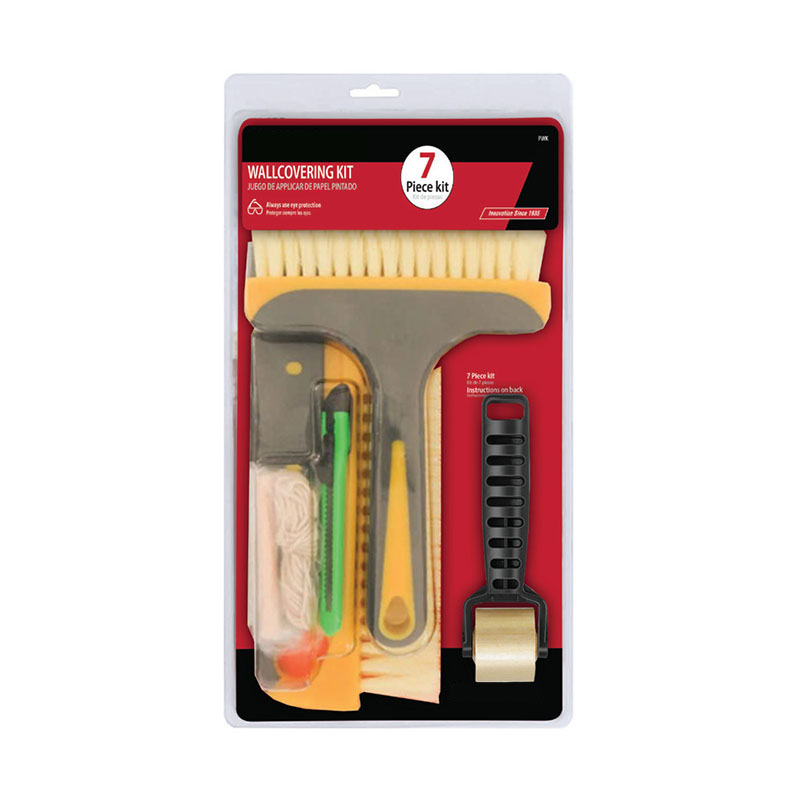
Painters use wallpaper brushes to spread paint or adhesive evenly across wall surfaces. The bristles hold the material while pressing it onto the wall, filling gaps and smoothing irregularities. Many interior projects rely on the brush for initial wall preparation. It helps create a solid base layer that supports a neat and professional finish. Without this tool, walls may appear uneven, and wallpaper edges may lift or bubble over time.
In professional settings, wallpaper brushes are often paired with rollers or larger spreading tools. Rollers cover wide areas quickly, but brushes handle detail work that requires accuracy. Painters frequently move the brush along corners, trim, and ceiling edges to achieve consistent results. The technique requires controlled pressure and deliberate strokes. Skillful use of the brush minimizes waste, reduces splatter, and ensures that paint or adhesive adheres evenly.
Homeowners and DIY enthusiasts also rely on wallpaper brushes for interior projects. Learning proper brush handling can improve the final appearance of walls significantly. Users report that careful brushing produces smooth seams and prevents imperfections. Different surfaces require slightly different methods. For example, textured walls may need firmer brushing to embed adhesive into grooves, while smooth plaster walls demand gentle strokes to avoid streaks or brush marks.
Maintenance of wallpaper brushes is important for their longevity and performance. Cleaning the bristles thoroughly after each session prevents hardened paint or adhesive from interfering with future work. Storing the brush in a dry, protected location preserves the shape of the bristles. Some brushes come with softer or firmer bristles depending on the intended surface, but regular care ensures that even a standard brush continues to perform well over time.
The tool also adapts well to various wall treatments. It works effectively on drywall, plaster, and other common surfaces. Painters often rely on the brush to smooth out air pockets or uneven adhesive when hanging wallpaper. The tactile feedback from the brush allows them to detect subtle irregularities and correct them immediately. This level of control makes it indispensable for tasks that demand precision.
Even though the wallpaper brush is low-technology, its role in wall painting cannot be underestimated. It combines simplicity, durability, and effectiveness. Skilled painters recognize that consistent technique, proper pressure, and thorough cleaning are just as important as the tool itself.
FAQ
What is a wallpaper brush?
It is a tool designed to spread paint or adhesive evenly across walls or wallpaper, providing a smooth finish.
Why is it important in painting?
The brush allows precise application in corners, edges, and detailed areas where larger tools cannot reach.
Can beginners use it effectively?
Yes. Careful handling and controlled strokes help beginners achieve neat results.
How should a wallpaper brush be cleaned?
Remove excess paint or adhesive immediately after use and store in a dry place to preserve bristle shape.
Which surfaces are suitable for a wallpaper brush?
It works on plaster, drywall, textured walls, and areas around trim or ceilings.

-
 +86-13906791151
-
 sales@sanjiantools.com
-
 No.1 Xinggong Road, Huangzhai Town, Pujiang County, Zhejiang Province, China


Client
Copyright © Zhejiang Pujiang Sanjian Tools Co., Ltd. All Rights  浙公网安备33072602100309号
Reserved.
浙公网安备33072602100309号
Reserved.

Construction Paint Tools Factory