 sales@sanjiantools.com


 中文简体
中文简体 Deutsch
 Español
Car Brush and the Changing Role in Vehicle Care
Car Brush has become a frequently discussed tool in vehicle care as more car owners focus on routine maintenance rather than professional detailing alone. Manual car cleaning tools are now commonly used in daily vehicle care because they remain affordable, easy to handle, and suitable for a wide range of vehicle surfaces. Within regular maintenance routines, the Car Brush is often used for consistent surface cleaning and basic care tasks.
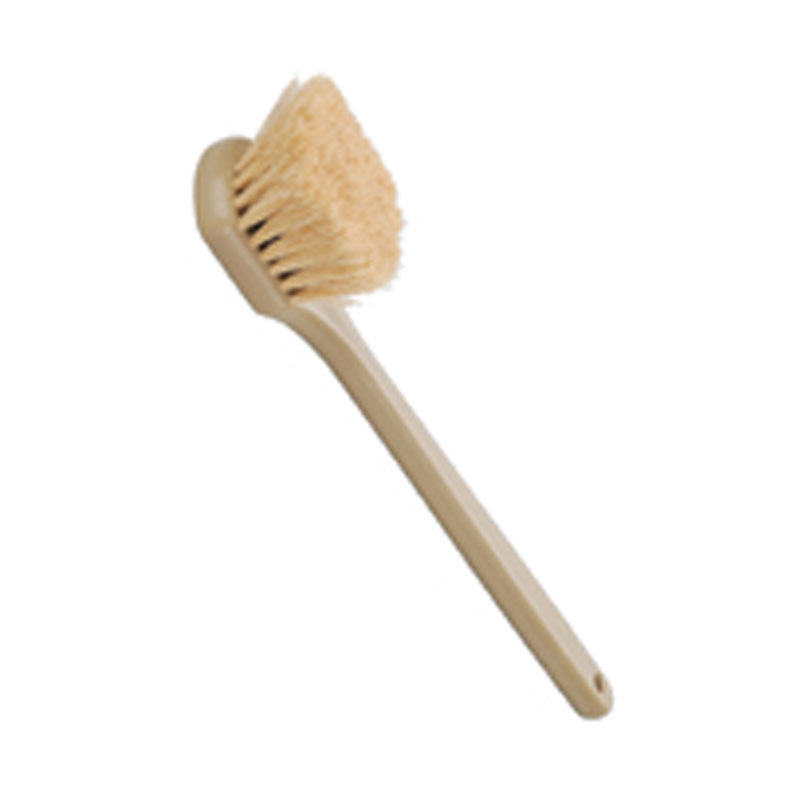
Home-based car washing remains part of everyday vehicle ownership. Surveys indicate that over 60% of private vehicle owners clean their cars at home at least once a month. A Car Brush helps remove dust, road salt, and surface debris without depending on automated washing systems. Soft-bristle designs are often chosen to reduce the risk of micro-scratches while still allowing access to wheels, grilles, and lower body panels. Many drivers prefer manual cleaning when working with darker paint finishes, which tend to show marks more clearly during frequent washing.
Vehicle maintenance routines have gradually shifted toward more frequent but lighter cleaning sessions. Instead of waiting for visible buildup, many owners wash their vehicles on a regular schedule to maintain appearance between service intervals. During these sessions, a Car Brush is commonly used to loosen surface contaminants before they adhere to paint, trim, or plastic components. This approach helps limit the accumulation of abrasive particles that can affect exterior surfaces over time.
Material design and paint safety remain important considerations. Modern vehicles often feature multi-layer paint systems that respond differently to pressure and friction compared with older coatings. To address this, Car Brush designs now include flagged bristles, controlled water-release features, and balanced handles that improve grip and movement. Industry testing shows that well-designed brushes can reduce surface friction by up to 30% when compared with rigid cleaning tools. These characteristics support repeated use during regular maintenance rather than occasional heavy cleaning.
Maintenance attention also extends to the brush itself. Many users clean their Car Brush after each wash by rinsing away trapped grit and allowing it to dry fully. This routine helps maintain bristle flexibility and reduces the chance of transferring debris during future use. Proper storage is also part of everyday care, particularly for users who wash vehicles frequently.
Beyond exterior cleaning, multi-purpose use has become common. The same Car Brush is often used for interior floor mats, trunk liners, and light-duty garage cleaning. This reduces the need for multiple tools and supports simple maintenance routines. Products described as adaptable or multi-use are often kept in service longer, especially in households with limited storage space.
Environmental factors also influence how vehicles are maintained. Manual washing with a Car Brush, combined with controlled rinsing, can reduce water use. Estimates suggest this approach may use about 40% less water than automated washing systems. Regular light cleaning also limits the need for heavy detergent use associated with infrequent deep washes.
As vehicle ownership continues across urban and suburban areas, practical tools remain part of everyday care. The Car Brush supports routine maintenance through straightforward use and familiarity, maintaining its place in vehicle care routines.
FAQ
Q1: Is a Car Brush suitable for newer vehicle finishes?
When designed with soft bristles and used with sufficient water, it is generally suitable for modern paint systems used in routine maintenance.
Q2: How long can a Car Brush be used?
Usage life depends on frequency and care. Many users replace it once the bristles lose flexibility or show visible wear.
Q3: Can it be shared between interior and exterior use?
Yes, as long as the brush is cleaned thoroughly between uses to avoid transferring grit to painted surfaces.

-
 +86-13906791151
-
 sales@sanjiantools.com
-
 No.1 Xinggong Road, Huangzhai Town, Pujiang County, Zhejiang Province, China


Client
Copyright © Zhejiang Pujiang Sanjian Tools Co., Ltd. All Rights  浙公网安备33072602100309号
Reserved.
浙公网安备33072602100309号
Reserved.

Construction Paint Tools Factory