 sales@sanjiantools.com


 中文简体
中文简体 Deutsch
 Español
How Wire Brush Cleaning Tool Helps in Metal Surface Preparation
A Wire Brush Cleaning Tool consists of bristles made from metal wire, attached to a handle or a power tool hub. The bristles do the work. They scrape, scratch, and cut away unwanted material from the surface. The mechanical action removes rust, old paint, scale, and other contaminants that would interfere with later processes.
Different configurations suit different jobs. Hand brushes work for small areas and detailed work. Wheel brushes mount on bench grinders or angle grinders for larger surfaces. Cup brushes reach into corners and along edges where other tools cannot go. The bristle diameter and density affect how aggressively the brush cuts. Thicker wires remove material faster but leave a rougher finish. Finer wires produce a smoother surface but take longer to clean.
The wire material also changes how the brush performs. Steel wire cuts aggressively and works well for heavy rust and scale removal. Brass wire cuts more gently and works on softer metals or where sparks must be avoided. Each type serves a specific purpose in metal preparation.
Why Metal Surface Preparation Requires Mechanical Cleaning
Metal surfaces rarely arrive ready for painting, welding, or coating. Rust forms on exposed steel. Mill scale from the manufacturing process remains on the surface. Old paint or coatings may cover the metal from previous use. Any of these contaminants will interfere with the next step.
A coat of paint applied over rust will fail. The rust continues to form under the paint, causing it to bubble and flake. A weld made through rust or scale will lack proper penetration. The contamination prevents the weld metal from bonding with the base material. A coating applied over an unprepared surface will not adhere properly.
Chemical cleaning methods exist, but they come with limitations. Chemicals require time to work. They produce waste that must be handled. They may not reach into all the crevices and pitted areas of the surface. Mechanical cleaning with a wire brush reaches into those irregular surfaces and removes contamination quickly.
How Does a Brass Wire Brush For Rust Differ from Steel Wire Brushes
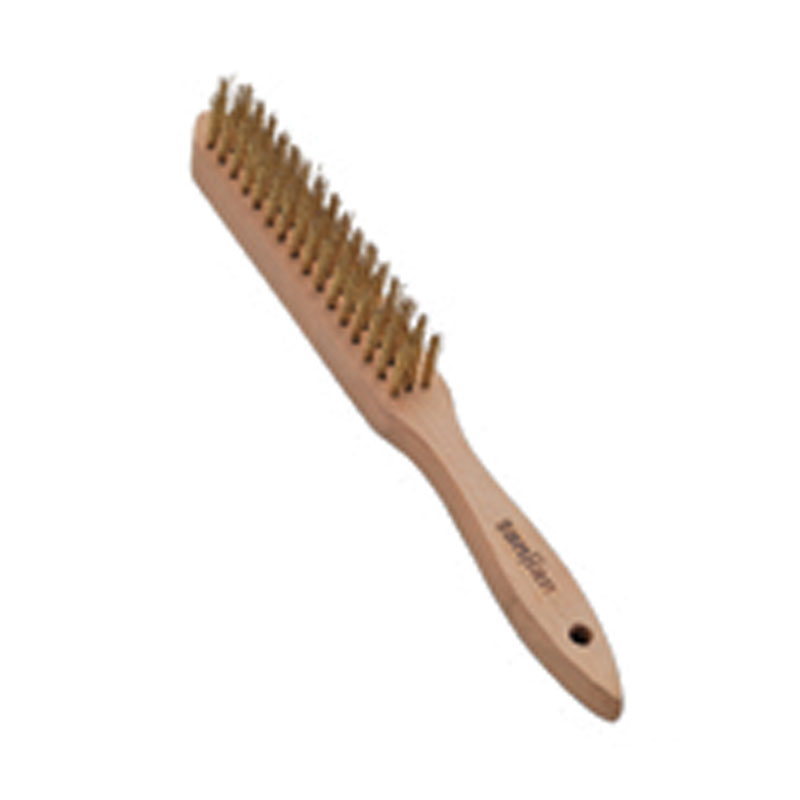
A Brass Wire Brush For Rust uses brass bristles instead of steel ones. The difference goes beyond the material. Brass brushes are considered non-sparking. Steel brushes can generate sparks when struck against metal surfaces. In environments with flammable vapours, dust, or gases, a brass wire brush reduces the fire and explosion risk.
The softness of brass makes it suitable for working on softer metals. A brass brush for rust and corrosion removal on aluminium, copper, or brass components removes the contamination without scratching the base metal. Steel bristles would cut into the soft metal, leaving gouges and altering the surface finish.
| Characteristic | Brass Wire Brush | Steel Wire Brush |
|---|---|---|
| Spark generation | Low | High |
| Suitability for soft metals | Good | Poor |
| Corrosion resistance | Good | Lower |
| Aggressiveness | Moderate | High |
| Typical applications | Hazardous environments, soft metals | General rust removal, heavy-duty cleaning |
The rust removal capability of a Brass Wire Brush For Rust works through gentle abrasion rather than aggressive cutting. The brass bristles break away surface rust while leaving the underlying metal intact. The method suits applications where preserving the base material matters more than speed.
What Are the Common Applications for Wire Brush Cleaning Tools
Welding preparation benefits from wire brushing. The area around a weld joint should be clean and free of contaminants. A wire brush removes rust, paint, and mill scale from the welding area, allowing the weld metal to bond properly with the base material.
Coating removal often requires wire brush cleaning. Old paint and finishes need to come off before new coatings can go on. The wire brush provides more control than chemical strippers and reaches into details that abrasive blasting may miss.
Deburring machined parts creates a use for wire brushes. Sharp edges left by cutting operations can be dangerous to handle and can interfere with assembly. A wire brush removes the burrs quickly, leaving a safe, clean edge.
How Does Brush Construction Affect Cleaning Performance
Crimped wire bristles have waves or bends in the wire. The crimping gives the bristle flexibility and allows it to conform to irregular surfaces. The brushing action provides consistent contact even on uneven metal surfaces. Knotted wire bristles are twisted together into tight bundles. The knotting creates a stiffer, more aggressive brush that cuts more effectively.
Hand brushes rely on the user's arm strength for the cleaning action. The brush size and handle shape affect how comfortably the user can apply pressure. Power tool brushes use the tool's motor to spin the brush, providing faster cleaning over larger areas.
Ergonomics matter in hand brush design. A comfortable handle, the right bristle stiffness, and a convenient working angle make the tool easier to use. A tool that feels right in the hand leads to better results and less fatigue.
What Safety Considerations Come with Wire Brush Use
Wire brushes remove material by cutting and scraping. That action creates tiny metal particles and fragments that fly through the air. Eye protection becomes essential when using any wire brush. A piece of wire or a metal fragment in the eye can cause serious injury. Safety glasses or goggles should always be worn.
Handling the brush itself requires some care. The wire bristles are sharp. Pressing too hard against the bristles or rubbing the skin across them can cause cuts. Using the brush with a comfortable grip and applying pressure through the handle, not the palm, reduces the risk.
A Brass Wire Brush For Rust offers an extra safety benefit. The non-sparking property makes it suitable for use around flammable materials, dust, and vapours. A steel brush might generate a spark that could ignite the surrounding atmosphere. The brass brush reduces that risk.
Maintaining the brush's condition also supports safety. A brush with loose or broken bristles may shed wire fragments during use. Those fragments can fly into the user or onto the workpiece. Inspecting the brush before each use and replacing worn brushes prevents accidents.
How Should Wire Brushes Be Maintained for Consistent Performance
Wire brushes accumulate debris during use. Rust particles, paint chips, and metal fragments get caught between the bristles. The buildup reduces the brush's effectiveness because the bristles can no longer reach the surface properly. Cleaning the brush after each use keeps it working well.
Worn bristles do not cut as effectively. A brush that has lost bristles or has bristles that are bent and deformed will not perform the same way it did when new. Replacing brushes when they show significant wear maintains consistent results.
Proper storage keeps the brush in good condition. Leaving a brush with debris trapped in the bristles allows rust to form on the wire. Rust weakens the bristles and may transfer to the next workpiece. Storing the brush in a dry location extends its service life.
A few maintenance points worth following:
- Clean debris from bristles after each use
- Inspect for loose or missing bristles regularly
- Replace brushes with significant wear
- Store in a dry location away from moisture
- Avoid dropping or mishandling the brush
Why Wire Brush Selection Matters for Specific Materials
The workpiece material drives the choice of brush. Steel surfaces respond well to steel brushes. The aggressive cutting action removes rust and scale quickly. The same brush on a softer metal like aluminium would damage the surface. Aluminium requires a brass brush or a brush with finer wire.
Surface finish requirements also influence the brush choice. A fine finish requires a brush that leaves a smooth surface. A coarse finish may be acceptable for some applications, such as preparing a surface for thick coating where the profile helps adhesion.
The condition of the surface affects the selection. A heavily rusted steel surface needs an aggressive brush to remove the heavy corrosion. A surface with light surface oxidation may only need a gentle brushing with a Brass Wire Brush For Rust.
How Does Wire Brush Cleaning Prepare Surfaces for Finishing
Paint and coating adhesion depends on surface cleanliness and surface profile. Wire brushing removes loose material and contaminants. The same action creates a textured surface that provides mechanical bonding sites for the coating. The key lies in the balance: clean enough for adhesion, textured enough for grip.
Wire brushing prepares surfaces for welding in a similar way. The cleaning removes contaminants that would cause porosity in the weld. The surface profile does not matter as much for welding as cleanliness does. A clean surface allows proper weld fusion and a stronger joint.
Different brush materials affect the surface profile. A steel brush leaves a different profile than a brass brush. The harder steel cuts into the surface more deeply. The softer brass smooths and polishes while removing contamination.
Why Are Wire Brushes Considered Essential Tools in Metalworking
Wire brushes serve a wide range of tasks across metalworking environments. No other single tool does quite the same job with the same simplicity. A wire brush removes rust, prepares surfaces, cleans welds, and deburrs edges. The versatility means a workshop needs fewer specialized tools.
The cost-effectiveness of wire brushes adds to their value. A good wire brush costs a fraction of what abrasive blasting equipment or chemical treatment systems cost. The maintenance requirements are minimal. A brush that is cared for will last through many projects.
Having different brush types available gives the worker options. A Brass Wire Brush For Rust sits alongside steel brushes in a well-stocked workshop. Each brush serves its specific purpose. The right brush for the job makes the work easier and produces better results.
| Workpiece Material | Recommended Brush Type | Reason |
|---|---|---|
| Steel or iron | Steel wire brush | Aggressive rust and scale removal |
| Aluminium or copper | Brass wire brush | Prevents surface damage |
| Stainless steel | Stainless steel brush | Avoids cross-contamination |
| Brass or bronze | Brass brush | Matches material hardness |
| Cast iron | Steel wire brush | Handles rough, porous surfaces |
The practical value of wire brushes in metalworking comes down to their simplicity and effectiveness. They do not require power, elaborate setups, or complex procedures. A worker can pick up a brush and start cleaning. The tool puts control in the user's hands, allowing precise work on specific areas. That combination of simplicity and effectiveness keeps wire brushes in workshops everywhere.

-
 +86-13906791151
-
 sales@sanjiantools.com
-
 No.1 Xinggong Road, Huangzhai Town, Pujiang County, Zhejiang Province, China


Client
Copyright © Zhejiang Pujiang Sanjian Tools Co., Ltd. All Rights  浙公网安备33072602100309号
Reserved.
浙公网安备33072602100309号
Reserved.

Construction Paint Tools Factory