 sales@sanjiantools.com


 中文简体
中文简体 Deutsch
 Español
How to Choose a China Steel Wire Brush for Workshop Tasks
Walk into any workshop, and a wire brush sits somewhere within reach. The tool looks simple enough. A handle, some wire bristles, and a job to do. But the variety available from China Steel Wire Brush suppliers tells a different story. The selection runs from hand brushes with wooden handles to power tool brushes that spin at high speed. The choice affects how well the work gets done.
Using the wrong brush creates problems. A brush with wire that is too stiff scratches a soft workpiece. One with wire that is too fine takes too long to remove rust or scale. The wrong shape makes the work awkward and slows progress. The right brush makes the job efficient and protects the workpiece from damage.
The range of options available from a China Steel Wire Brush manufacturer spans many types and configurations. Hand brushes, wheel brushes, cup brushes, and end brushes all come from the same factories. Each type serves a specific purpose in the workshop setting.
What Types of Steel Wire Brushes Are Available
Hand brushes work for manual cleaning and detailing. A worker holds the brush and moves it across the surface. The control is direct, and the pressure comes from the worker's arm. Hand brushes suit small areas, detailed work, and situations where a power tool might cause damage.
Power tool brushes attach to drills, angle grinders, or bench grinders. The tool provides the motion, and the worker guides the brush across the workpiece. Wheel brushes mount on a shaft and spin at high speed. Cup brushes fit angle grinders and reach into corners. End brushes get into holes and cavities where other shapes cannot go.
The wire construction affects how the brush behaves. Straight wire brushes offer a firm cutting action. Crimped wire brushes have more flexibility and provide a consistent brushing action across irregular surfaces. Knotted wire brushes, with wire twisted into tight bundles, deliver aggressive, high-impact cleaning for heavy-duty jobs.
How Does Wire Diameter Affect Brush Performance
Thicker wire removes material faster. The larger diameter has more mass and cuts more aggressively. A thick wire brush works well for heavy rust, thick scale, or stubborn paint. The trade-off is surface finish. Thick wire leaves a rougher surface that may require additional finishing.
Thinner wire produces a finer finish. The smaller diameter flexes more easily and conforms to the workpiece surface. A thin wire brush cleans without leaving heavy scratches. The work takes longer because each wire removes less material per pass.
The wire diameter chosen should match the condition of the workpiece and the desired finish. A heavily rusted steel part needs thick wire for efficient cleaning. A surface that just needs a light cleaning before painting works better with thinner wire.
What Are the Key Differences Between Wire Styles
Straight wire brushes have bristles that stand straight out from the brush body. Each wire acts as a cutting tooth, scraping the surface. Straight wire works well for general cleaning and deburring. The action is predictable and consistent.
Crimped wire brushes have wavy or crimped wire. The crimping gives the wire more flexibility. The brush conforms to the surface better than straight wire, providing even contact across irregular shapes. Crimped wire works well for applications where consistent finish matters.
Knotted wire brushes bundle the wire into tight knots. The knots create a stiff, aggressive brush that cuts through heavy rust and scale. The knotted construction also extends brush life because the wire is less likely to break off during use. Knotted brushes suit heavy-duty applications like weld cleaning and heavy rust removal.
| Wire Style | Flexibility | Aggressiveness | Best Applications |
|---|---|---|---|
| Straight wire | Low | Moderate | General cleaning, deburring |
| Crimped wire | High | Low to moderate | Surface finishing, light cleaning |
| Knotted wire | Low | High | Heavy rust removal, weld cleaning |
How Does a Wire Brush Cleaning Tool Handle Different Materials
The bristle material generally determines what surfaces a Wire Brush Cleaning Tool can handle without much risk of damage. Steel wire brushes usually work well on steel workpieces. The matching hardness lets the brush clean effectively without wearing out too quickly or scratching up the surface underneath.
Stainless steel wire brushes suit applications where rust contamination would cause real problems. The stainless construction resists corrosion fairly well, so the brush generally doesn't leave rust particles behind on the workpiece. These brushes often get used on stainless steel parts specifically to avoid cross-contamination that could help to corrosion showing up later.
Brass-coated steel wire offers a softer option for lighter work. The brass coating cuts down on the risk of scratching softer metals. That coating also makes these brushes a reasonable fit for environments where steel wire could throw off sparks. The trade-off usually shows up in brush life, which tends to run shorter since the coating wears away with use over time.
Picking a suitable bristle material helps prevent damage and keeps cleaning fairly efficient. A Wire Brush Cleaning Tool with the right bristles cleans at a decent pace and tends to leave the surface in reasonable shape. One with a mismatched material can cause problems that end up needing extra work to sort out afterward.
What Should Be Considered When Choosing Hand Brushes vs Power Brushes
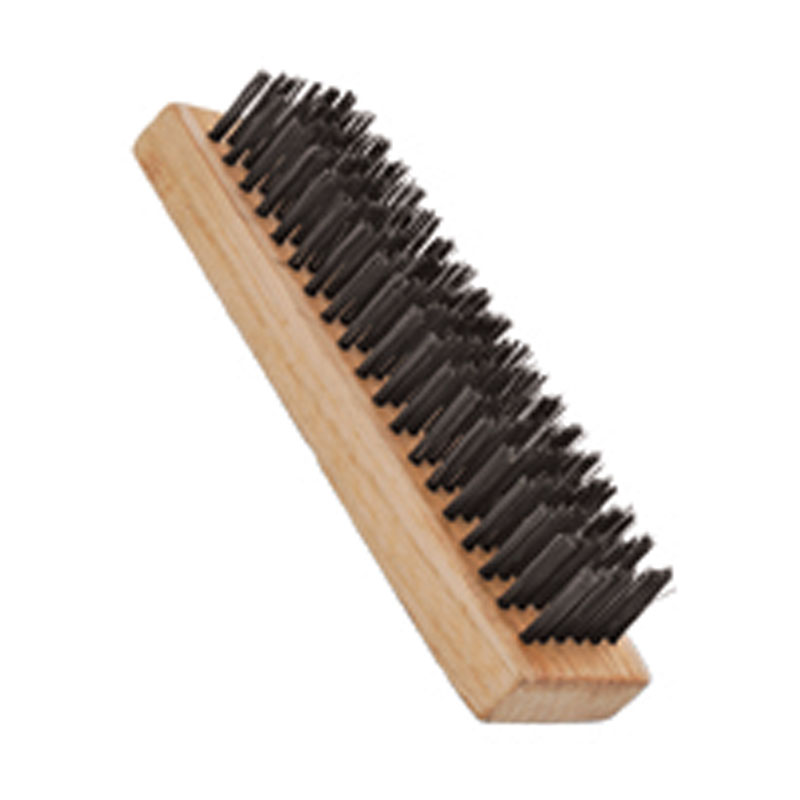
Hand brushes give the user a fair amount of control over pressure and direction. The worker can feel the surface as they go and adjust the brushing action on the fly. Hand brushes generally work well for detailed work, tight spaces, and lighter cleaning jobs. That control tends to make them suitable for finishing work where surface quality carries some weight.
Power brushes cover large areas at a faster pace. The brush spins at speed and removes material quicker than hand brushing typically allows. Power brushes suit heavier cleaning jobs where speed matters more than fine control over the motion. That faster pace makes them fairly practical for higher-volume workshop settings.
The trade-off between control and speed tends to shape which type makes more sense for a given job. A small part with fine details may call for the control a hand brush offers. A large flat surface, on the other hand, usually benefits more from the speed a power brush brings. The choice often comes down to the size of the workpiece and how much cleaning actually needs doing.
A few points worth weighing when deciding between hand and power brushes:
- Hand brushes generally work better for small or detailed areas
- Power brushes tend to cover large surfaces more efficiently
- Hand brushes usually offer better feedback and finer control
- Power brushes tend to reduce physical effort on bigger jobs
- The choice often affects how long the work ends up taking overall
What Role Does Brush Density Play in Cleaning Effectiveness
Brush density refers to how many wire bristles fill a given area of the brush. Higher-density brushes pack more wires into that space. The extra wires contact the surface more often, so material removal generally happens faster. Denser brushes tend to work well for more demanding cleaning tasks where speed matters.
Density also plays into brush life. A denser brush has more wires that need to wear down before it's spent, so it usually lasts longer before needing replacement. The higher upfront cost of a dense brush can pay off over time through that extended service life.
The link between density and flexibility matters here too. A denser brush tends to be stiffer, since the wires have less room to move around against each other. That stiffness usually brings more aggressive cleaning but a bit less ability to conform to uneven surfaces. The balance between density and flexibility ideally lines up with what the specific job actually calls for.
A few points about brush density and performance:
- Higher density generally means faster material removal
- Higher density tends to extend brush life
- Lower density tends to offer more flexibility
- Lower density usually conforms better to uneven surfaces
How Does a China Steel Wire Brush Compare Across Suppliers
The quality of a China Steel Wire Brush tends to vary quite a bit from one supplier to the next. Material selection, wire processing, and assembly methods all play into how the brush ends up performing. A brush made with decent materials and careful construction generally lasts longer and works more consistently than one put together with less attention to detail.
Consistent manufacturing standards matter for workshop users over the long run. A brush that works well once should, in theory, work about the same way the next time it's used. Inconsistent quality tends to create uncertainty on the job and wastes time that could go elsewhere. Reliable suppliers usually hold onto standards that deliver fairly consistent results order after order.
When sourcing from a China Steel Wire Brush manufacturer, a few points deserve a closer look:
- The type and grade of steel wire used in the brush
- The consistency of wire diameter across the whole brush
- How the bristles attach to the brush body
- The quality of the handle or mounting hardware
A reliable supplier generally offers documentation and reasonable transparency about their materials and processes. The ability to customise brush specifications tends to add value for users with fairly specific needs. The relationship with the supplier, over time, ends up shaping the consistency and quality of the brushes actually received.

-
 +86-13906791151
-
 sales@sanjiantools.com
-
 No.1 Xinggong Road, Huangzhai Town, Pujiang County, Zhejiang Province, China


Client
Copyright © Zhejiang Pujiang Sanjian Tools Co., Ltd. All Rights  浙公网安备33072602100309号
Reserved.
浙公网安备33072602100309号
Reserved.

Construction Paint Tools Factory