 sales@sanjiantools.com


 中文简体
中文简体 Deutsch
 Español
How Brass Wire Brush For Rust Removes Paint And Surface Oxidation
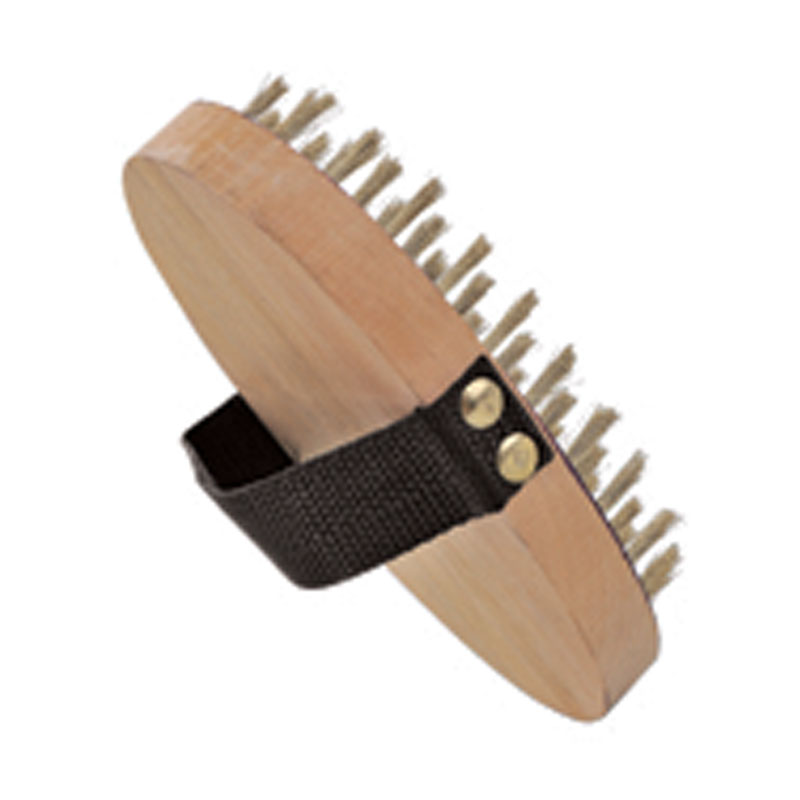
Metal surfaces rarely stay unchanged once exposed to air and moisture. A thin layer may appear, then gradually turn into visible oxidation, and in many cases old paint begins to lose grip from underneath. In maintenance work, surface preparation becomes a regular step before any further processing, and among common tools, Brass Wire Brush For Rust is often used where controlled removal matters more than aggressive cutting.
Unlike cutting tools that remove material quickly, wire-based cleaning relies on repeated contact. The effect builds slowly through friction, and that slow buildup is what makes the surface change in a more controlled direction. A Wire Brush Cleaning Tool works in a similar way, relying on repeated movement instead of single-impact force.
Why Do Metal Surfaces Accumulate Rust Paint Layers And Oxidation
Rust and oxidation do not appear in one moment. The process usually starts quietly, often in places where air circulation is weak or where moisture stays longer than expected. Once the surface begins to react, the change spreads in layers, sometimes unevenly, depending on exposure conditions.
Paint layers behave in a different way, although the result often looks similar when failure starts. Coating may still look stable on the outside while bonding underneath slowly weakens. After a period of time, small gaps appear, and oxidation can grow under the surface without being immediately visible.
Several everyday conditions often contribute to this process:
- metal exposure to air for long periods
- moisture remaining on uneven surfaces
- repeated contact through handling or friction
- coating stress from temperature changes
- storage conditions with limited airflow
In many working environments, these factors overlap. That is why rust, paint lift, and oxidation are often found together rather than in isolation. The surface becomes a mixed condition, where different layers behave differently under the same environment.
What Is The Working Principle Of Brass Wire Brush For Rust Removal
A Brass Wire Brush For Rust operates through continuous movement where fine wire strands touch the metal surface repeatedly. Each wire bends slightly when it meets resistance, and this flexibility is part of what allows the brush to adapt to uneven areas instead of reacting in a rigid way.
The cleaning process does not rely on a single strong force. Instead, it develops through repeated light contact. Over time, loose oxidation, weak paint layers, and surface deposits begin to separate in small fragments.
The behavior of a Wire Brush Cleaning Tool depends on several working conditions:
- speed of rotation or brushing motion
- pressure applied during contact
- direction and angle of movement
- condition of wire strands over time
- surface hardness and roughness
When the brush moves across metal, each point of contact is slightly different. Smooth areas allow lighter interaction, while rough or corroded areas increase resistance. That difference is what slowly shapes the cleaning result.
In practical use, the process feels gradual. Nothing is removed in a single action, instead the surface changes step by step as contact repeats.
How Does Brass Wire Brush For Rust Affect Paint Layers
Paint behaves differently depending on how strongly it is attached to the metal underneath. In some areas, adhesion remains firm. In other areas, small separations may already exist without being visible.
When a Brass Wire Brush For Rust moves across painted surfaces, it does not remove coating evenly. Instead, weaker sections begin to loosen, while stronger areas remain attached for longer periods. This creates a gradual separation pattern rather than a clean split.
The response of paint layers usually depends on:
- how long the coating has been exposed
- thickness and structure of the paint layer
- pressure applied during brushing
- wire flexibility and contact density
- movement consistency across the surface
Thin or aged coatings tend to break into small fragments, while thicker layers may wear down slowly through repeated contact.
| Surface Condition | Response During Brushing |
|---|---|
| weak adhesion paint | gradual lifting and flaking |
| thick coating | slow surface thinning |
| mixed rust layer | uneven removal pattern |
| rough base metal | increased friction contact |
| smooth coated surface | slower, more controlled wear |
Why Is Brass Wire Suitable For Surface Cleaning Applications
Material choice changes how a cleaning tool behaves on metal. Brass wire is often used because its contact feel is relatively softer compared with harder wire types. That difference affects how deeply the surface is touched during cleaning.
With softer contact, surface layers can be adjusted without heavy cutting into the base metal. This becomes important when the goal is preparation rather than reshaping.
Brass wire also tends to keep a more stable contact feel during repeated use. Even when working across uneven surfaces, the brush follows surface changes in a smoother way instead of reacting sharply.
Common characteristics include:
- softer interaction with metal surfaces
- reduced risk of deep surface marking
- steady response during repeated movement
- adaptability to curved or uneven shapes
- consistent performance across different materials
In many maintenance situations, control matters more than speed. Brass wire supports that kind of controlled behavior.
How Does Wire Brush Cleaning Tool Perform On Oxidized Surfaces
Oxidized metal surfaces rarely behave in a uniform way. Some areas may be lightly affected, while others show deeper corrosion. A Wire Brush Cleaning Tool responds differently depending on these variations.
Light oxidation tends to detach early during brushing. Heavier layers require longer contact and repeated movement before noticeable change appears. The difference is not only in hardness, but also in how firmly the oxidation bonds with the base metal.
During operation, the brush may feel slightly different as it moves across changing surface zones. Resistance increases on rough areas, while smoother sections allow easier movement. That shift is often gradual rather than sudden.
Surface response is influenced by:
- depth and spread of oxidation
- texture variation across metal surface
- consistency of brushing movement
- flexibility of wire contact
- stability of applied pressure
In practical use, cleaning results often reflect surface condition rather than operator force. The tool follows the material behavior more than it dictates it.
How Do Operating Techniques Improve Cleaning Consistency
Metal cleaning with a wire-based tool rarely depends on a single action. Even when a Brass Wire Brush For Rust is suitable for surface work, final result still shifts according to how contact is maintained across different zones of the material. In real workshop conditions, movement tends to matter as much as tool selection.
A steady approach usually creates a more even surface transition. When pressure remains balanced, wire contact spreads more uniformly, and oxidation layers tend to come off in a gradual way instead of breaking unevenly. Once pressure fluctuates, surface response also becomes less predictable, especially near edges or worn sections.
Angle control plays a quieter role. A slight tilt change may redirect how wire strands touch the surface, which affects how paint or rust separates. In some cases, small adjustments in angle help move across uneven zones without creating sharp contact marks.
Common working habits that often improve consistency include:
- letting the brush pass over surface instead of pressing into it
- keeping movement continuous across connected areas
- reducing repeated contact on one fixed point
- adjusting direction gradually near corners
- allowing wire flexibility to follow surface texture
A Wire Brush Cleaning Tool tends to respond more smoothly when movement is not forced. The surface itself often dictates how the brush behaves, so smoother handling usually comes from following that natural variation instead of resisting it.
How Does Surface Condition Affect Cleaning Performance
Not all metal surfaces react the same way during cleaning. Even on the same part, different zones may behave differently once brushing begins. Some areas may have light oxidation, while others carry thicker layers or remnants of old coating.
When a Brass Wire Brush For Rust comes into contact with these mixed conditions, removal does not happen evenly. Light layers tend to release quickly, while deeper corrosion takes longer and requires repeated passes. The transition between these zones often feels gradual during operation.
Surface texture also plays a role. Smooth areas allow the brush to glide with less resistance, while rough sections increase friction and slightly change movement feedback. That difference can be felt through the tool, especially during continuous use.
Several surface-related factors influence the result:
- thickness of oxidation layer across different zones
- variation in paint adhesion strength
- presence of pitted or uneven metal areas
- previous mechanical wear on the surface
- level of moisture exposure before cleaning
In practice, cleaning outcome is rarely uniform. Instead, it follows surface structure, revealing areas that were already weaker before brushing began.
What Role Does Tool Structure Play In Cleaning Performance
Inside a Wire Brush Cleaning Tool, structure determines how contact is distributed across the surface. Wire density, arrangement, and flexibility all influence how force spreads during rotation or manual movement.
When wire strands are arranged more evenly, surface contact tends to stay stable, and cleaning pattern becomes more predictable. If distribution is uneven, certain points may carry more pressure than others.
Rotation stability also affects behavior. When movement is balanced, the brush maintains smoother contact. If imbalance appears, vibration increases slightly, and that vibration transfers into surface interaction, especially on harder metal sections.
Key structural elements that influence performance:
- wire arrangement density and direction
- balance of rotating core during movement
- stability of handle or mounting connection
- flexibility range of wire strands
- overall symmetry of brush head
Manufacturing choices made by a Brush Machine Manufacturer often focus on these details, since even small differences in structure can change how the tool behaves during continuous surface cleaning.
How Do Different Work Environments Influence Rust Removal Process
Working environment often changes how surface cleaning feels, even when the same tool is used. A Brass Wire Brush For Rust may behave differently depending on where the work takes place and how surrounding conditions affect visibility, airflow, and positioning.
In enclosed spaces, particles released during cleaning may remain longer in the air, slightly affecting visibility and comfort. In open environments, airflow disperses particles more quickly, which changes how the surface is seen during work.
Lighting conditions also matter more than expected. When surface reflection is strong or uneven, it becomes harder to judge how much material has already been removed.
Typical environmental influences include:
- airflow strength around working area
- visibility of surface texture under lighting
- stability of work surface or fixture
- space available for controlled movement
- presence of surrounding vibration sources
Even small environmental differences can influence how a Wire Brush Cleaning Tool feels during operation, especially during longer cleaning tasks where surface variation is already present.
How Is Wire Brush Cleaning Tool Evolving In Surface Treatment Applications
Surface preparation methods continue to shift toward more controlled and layered approaches. Instead of removing all unwanted material in a single pass, cleaning processes are often divided into gradual steps that adjust surface condition slowly.
Within this direction, wire-based tools remain widely used because of their flexible contact behavior. A Wire Brush Cleaning Tool can adapt to uneven surfaces without excessive force, which makes it suitable for mixed-condition metal parts where rust, paint, and oxidation appear together.
A Brass Wire Brush For Rust is often included in this type of work because of its balanced contact behavior. It does not aggressively cut into the base material, yet still provides enough friction to remove unwanted surface layers gradually.
Current usage direction tends to focus on:
- more controlled surface preparation stages
- reduced risk of deep surface marking
- smoother transition between cleaning and finishing steps
- improved adaptability to mixed surface conditions
- consistent handling across different metal shapes
Rather than replacing older methods completely, wire brushing continues to fit into evolving maintenance routines where controlled surface adjustment is required before further processing steps.

-
 +86-13906791151
-
 sales@sanjiantools.com
-
 No.1 Xinggong Road, Huangzhai Town, Pujiang County, Zhejiang Province, China


Client
Copyright © Zhejiang Pujiang Sanjian Tools Co., Ltd. All Rights  浙公网安备33072602100309号
Reserved.
浙公网安备33072602100309号
Reserved.

Construction Paint Tools Factory