 sales@sanjiantools.com


 中文简体
中文简体 Deutsch
 Español
Comparing Brass Bristle Softness and Steel Hardness in a Wire Brush Cleaning Tool
Cleaning a metal surface with a wire brush involves more than removing visible dirt. The brush also makes repeated contact with the material underneath, so the hardness and flexibility of its bristles can influence what happens during use.
A softer bristle tends to conform more readily to small changes in the surface. A harder one can maintain greater resistance when pressed against stubborn deposits. The difference becomes noticeable when cleaning surfaces with a polished finish, thin coating, fine texture, or relatively soft base material.
The condition of the surface should be considered alongside the type of residue. Loose dirt does not require the same contact as hardened rust or firmly attached residue. Applying a hard brush to a delicate area simply because stronger cleaning is available can change the surface unnecessarily.
Several factors can affect the result:
- Hardness of the bristles
- Flexibility during contact
- Surface condition
- Type of residue
- Applied pressure
- Direction of brushing
A Wire Brush Cleaning Tool therefore needs to be viewed as part of the cleaning process rather than as a single-purpose object. The same brush may behave differently when used on a smooth decorative surface and a rough structural component.
Bristle hardness also influences how quickly a surface responds to repeated brushing. Softer material may require more controlled movement, while a harder brush can remove material more aggressively. Matching the contact level to the surface helps keep cleaning focused on the unwanted residue.
How Does Brass Bristle Behave on Delicate Surfaces
Brass bristles have a relatively softer and more flexible character than steel bristles. When they move across a surface, they can bend around small irregularities rather than maintaining the same rigid contact associated with harder wire.
That behavior can be useful where the underlying material needs careful treatment. Decorative metal surfaces, softer metals, and areas with light oxidation may call for a brushing action that removes residue without creating unnecessary changes to the surface.
The way the brush is handled still matters. Excessive pressure can increase the force applied to the surface even when the bristles themselves are comparatively soft. Repeated brushing over one small area can also gradually alter the appearance.
A controlled approach often involves:
- Starting with light contact.
- Keeping the brush moving instead of concentrating on one point.
- Checking the surface as residue is removed.
- Increasing contact only when the remaining material requires it.
Brass is not automatically suitable for every delicate material. Some coatings and finishes can still react to mechanical brushing, particularly when the surface is thin or already worn.
For a Wire Brush Cleaning Tool used around sensitive surfaces, the useful question is not simply whether the bristles are soft. Surface condition, residue strength, brushing pressure, and the intended finish all influence whether the contact is appropriate.
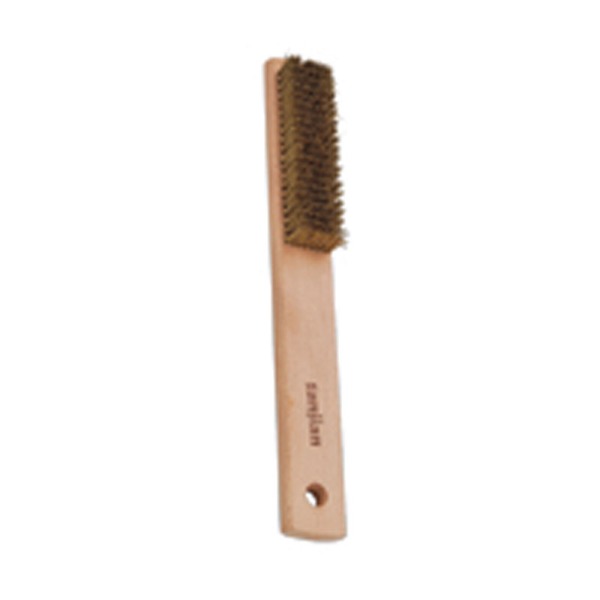
What Makes Steel Bristle Harder For Heavy Cleaning
Steel bristles provide a firmer brushing action. Their greater resistance to bending allows the brush to maintain stronger contact with hardened deposits, rough metal surfaces, and firmly attached residue.
That characteristic makes steel wire useful in cleaning tasks where loose dirt is not the main concern. Rust buildup, old surface residue, scale-like deposits, and remaining coating material can require a stronger mechanical action than a softer brush can provide.
The tradeoff appears when the underlying surface is less resistant than the material being removed. A hard bristle does not distinguish between unwanted residue and a vulnerable coating simply because the cleaning target is different. Pressure and movement need to be controlled according to the surface underneath.
A steel brush may be suitable when the working surface is:
- Structurally robust
- Rough or unfinished
- Covered with firmly attached residue
- Less sensitive to visible brushing marks
- In need of mechanical surface preparation
The final condition depends on more than bristle hardness. Brush angle, pressure, movement, and contact time can all change the effect. A hard brush used lightly may behave differently from the same brush pushed firmly against the surface.
For this reason, steel and brass should not be treated as interchangeable materials. Each creates a different balance between cleaning force and surface contact.
Where Is A Brass Wire Brush For Rust More Suitable
Rust varies considerably in thickness and attachment. A light layer on a relatively sensitive metal surface presents a different cleaning problem from a heavy, hardened layer on rough structural material.
A Brass Wire Brush For Rust can be considered when rust removal needs to be combined with gentler contact. The softer bristles can work across light corrosion residue while reducing the mechanical intensity associated with harder steel wire.
Suitable applications may include:
- Light surface rust on softer metal
- Rust around areas where surface appearance matters
- Cleaning before a later surface treatment
- Removing loose oxidation from detailed shapes
- Maintenance work on components that require careful handling
The underlying metal remains the key consideration. Brass brushing should not be selected simply because the target is rust. If the corrosion layer is firmly attached and the base material is robust, another brush type may be more appropriate for the task.
Brush movement also changes the result. Short, controlled passes can make it easier to judge how quickly the rust is being removed. Once the unwanted material has been cleared, continued brushing serves little practical purpose and may place unnecessary contact on the underlying surface.
A Brass Wire Brush For Rust can thus occupy a specific position between surface protection and mechanical cleaning. Its value comes from matching the brushing action with the condition of the rust and the material beneath it, rather than treating rust removal as one uniform task.
How Do Brass And Steel Bristles Affect Surface Finish
The condition left behind after brushing can matter as much as the residue removed during cleaning. A metal surface may need to remain smooth, retain an existing texture, or accept another treatment later. In each case, the brushing action becomes part of the surface preparation process.
Brass and steel bristles create different contact behavior. A brass brush tends to offer a more flexible interaction with the workpiece, while steel wire maintains firmer contact when pressure is applied. The difference can become visible on softer materials or surfaces where marks are easier to notice.
Surface appearance may change through several mechanisms:
- Repeated contact can alter a polished appearance.
- Firm brushing may create visible directional marks.
- Worn bristles can change the consistency of the brushing action.
- Concentrated pressure can affect a small area differently from broad movement.
- Residue trapped between bristles and the workpiece can influence the final surface.
A smooth component does not always need a smoother-looking result after cleaning. Some industrial surfaces are intentionally textured, while others need to remain visually consistent with surrounding components. The appropriate brush depends on the condition expected after the residue has been removed.
A Wire Brush Cleaning Tool should also be considered in relation to what happens next. If the cleaned surface will receive another treatment, unnecessary marks or embedded residue can interfere with the following operation. Cleaning and surface preparation are often closely connected.
Which Materials Need More Care During Wire Brushing
Not every metal reacts to mechanical brushing in the same way. A hard structural surface may tolerate firm contact, whereas a softer material can show changes with relatively gentle treatment. Coated surfaces introduce another concern because the coating itself may be less resistant than the base material.
The material underneath the residue should be identified before choosing the brush. A surface that looks heavily contaminated may actually have a thin protective layer beneath the dirt or oxidation.
| Surface Condition | Brush Consideration | Main Concern |
|---|---|---|
| Soft metal | Flexible bristles and light contact | Surface marks |
| Coated metal | Controlled brushing | Coating damage |
| Polished surface | Gentle contact | Change in appearance |
| Rough metal | Firmer brushing may be suitable | Uneven cleaning |
| Detailed component | Controlled movement | Hard-to-reach areas |
Surface hardness provides useful guidance, but it does not answer every question. Coating thickness, existing scratches, edges, corners, and the condition of the material can all change the practical result.
Decorative components deserve particular care. A small change in texture may remain visible even after the residue has disappeared. For functional parts, appearance may be less important, yet dimensional surfaces or mating areas can still require controlled treatment.
Testing a small, less visible area can provide a practical indication of how the bristles interact with the material. Such a check is especially useful when the surface condition is unclear or when a visible finish needs to remain consistent.
How Should A Wire Brush Cleaning Tool Be Matched With The Task
Tool selection becomes easier when the cleaning problem is separated into several parts. The type of residue determines how much mechanical action may be needed, while the base material sets a limit on how much contact the surface can tolerate.
A light layer of dust and loose oxidation calls for a different approach from hardened rust or old coating residue. Brush construction matters as well. Bristle stiffness, shape, arrangement, and contact area influence how force is distributed across the working surface.
The intended method of use adds another variable. A hand-held brush allows the operator to adjust pressure and direction directly. A powered brush introduces faster movement, so contact needs to be controlled more carefully around edges, thin sections, and delicate finishes.
Before selecting a tool, the following points can be checked:
- What needs to be removed?
Loose contamination and firmly attached residue require different brushing actions. - What material lies underneath?
The base surface determines how much mechanical contact is reasonable. - What finish is required afterward?
A surface intended for appearance or further treatment may need gentler handling. - How will the brush be moved?
Manual and powered applications create different contact conditions. - Where is the residue located?
Narrow openings, corners, and irregular shapes can affect brush access.
A Wire Brush Cleaning Tool is consequently selected according to the entire cleaning task rather than the brush material alone. Even the same bristle type can produce different results when the pressure, direction, and working surface change.
What Is Changing In Wire Brush Cleaning Practices
Industrial cleaning has gradually moved toward more controlled surface treatment. Removing residue remains necessary, but the condition of the underlying material receives greater attention when components have coatings, decorative finishes, or later processing requirements.
That shift changes how brush materials are considered. Brass wire can have a role where lighter contact is needed, while steel wire remains relevant for surfaces that can tolerate firmer mechanical action. The distinction is less about choosing one material for every task and more about matching the tool to the working conditions.
A Brass Wire Brush For Rust may be selected for light corrosion on a surface where aggressive brushing could create unwanted marks. Steel bristles may be considered when the residue is firmly attached and the base material can tolerate stronger contact.
Production and maintenance teams may also pay attention to factors beyond the initial brush choice:
- Condition of the bristles during repeated use
- Cleanliness of the working area
- Pressure applied during brushing
- Direction and consistency of movement
- Surface inspection after cleaning
- Storage conditions between uses
Tool condition can gradually affect cleaning behavior. Bent, worn, or contaminated bristles may no longer contact the surface in the same way. Regular inspection helps identify changes before the brushing process becomes inconsistent.
The broader practice is moving toward task-based selection. Material, residue, surface finish, and the next production step are considered together, allowing a Wire Brush Cleaning Tool to serve a defined cleaning purpose rather than being treated as a general-purpose solution.

-
 +86-13906791151
-
 sales@sanjiantools.com
-
 No.1 Xinggong Road, Huangzhai Town, Pujiang County, Zhejiang Province, China


Client
Copyright © Zhejiang Pujiang Sanjian Tools Co., Ltd. All Rights  浙公网安备33072602100309号
Reserved.
浙公网安备33072602100309号
Reserved.

Construction Paint Tools Factory