 sales@sanjiantools.com


 中文简体
中文简体 Deutsch
 Español
Comparing Dry and Wet Brushing With a Wire Brush Cleaning Tool
Rust rarely appears on a metal surface in exactly the same condition. A neglected outdoor component may have loose flakes sitting on the surface, while another part may show a thin layer of discoloration with the underlying metal still relatively smooth. Old tools, fittings, brackets, pipes, frames, and workshop parts can all develop different forms of surface corrosion.
That difference affects how brushing should be carried out. The purpose is not simply to rub the surface until it looks clean. A suitable method should remove loose rust and unwanted residue without creating unnecessary damage to the metal underneath.
Dry brushing and wet brushing create two different working conditions. Dry brushing keeps the surface free from added moisture, making loose rust easy to see as it is removed. Wet brushing introduces water or another suitable cleaning liquid, which can help control loose particles and surface dirt. The choice depends on the material, the condition of the rust, the surrounding environment, and what needs to happen after cleaning.
A Wire Brush Cleaning Tool can be used in either approach, although the brushing process may feel quite different. On a dry surface, the brush has direct contact with the rust layer. Under wet conditions, liquid changes the way loose particles move across the surface and can make the work area less dusty.
The condition of the base metal should remain part of the decision. A rough steel surface may tolerate firmer brushing than a thin decorative component. A part with a visible finish may also need gentler treatment because removing rust is only one part of the job.
Before starting, it is useful to check:
- whether the rust is loose or firmly attached;
- whether the underlying metal has already been damaged;
- whether the surface has paint, plating, or another finish;
- whether water can be used safely around the component;
- how the cleaned surface will be protected afterward.
The surrounding workspace matters as well. Dry brushing can release fine rust particles, so ventilation and suitable personal protection may be needed. Wet brushing can reduce airborne dust, yet it introduces moisture that needs to be removed after cleaning.
In other words, the brushing method should follow the condition of the work rather than being selected as a fixed routine.
How Does Dry Brushing Work on Rusty Surfaces
Dry brushing is straightforward: the brush contacts the rusty area without adding water or cleaning liquid. As the bristles move across the surface, loose rust, scale, and other deposits can be detached from the metal.
The method works particularly well when the unwanted material is already loose enough to break away through mechanical contact. A hand brush can be moved across a small fitting or tool, while a powered brush may be used when a larger surface requires repeated brushing.
Pressure needs some judgment. Pressing harder does not automatically produce a better result. Excessive force can wear the brush quickly and may scratch the underlying surface, especially when the metal is relatively soft or has a decorative finish.
The direction of brushing can also influence the work. Moving repeatedly across a heavily rusted area can loosen deposits, while changing direction may help reveal patches that were hidden beneath surface residue. The operator can then inspect the exposed metal instead of relying only on how much debris has been removed.
One practical advantage of dry work is visibility. Rust flakes and loose particles can be seen as they come away from the surface. Once the debris is removed, it becomes easier to judge whether another pass is necessary.
There is a drawback, however. Dry rust particles can become airborne during brushing. A small hand‑cleaning task may create little disturbance, while powered brushing on a larger surface can produce considerably more dust.
For this reason, the working area should be prepared before brushing begins. Depending on the job, that can involve:
- keeping unnecessary items away from the work area;
- providing suitable ventilation;
- wearing appropriate eye protection;
- using respiratory protection where the work environment requires it;
- collecting loose debris after brushing.
Dry brushing is also convenient when moisture would create another problem. Electrical components, moisture‑sensitive assemblies, or parts that cannot be dried easily may be better handled without introducing liquid.
Once the loose material has been removed, the surface should be inspected rather than assuming that all visible discoloration represents the same problem. Some dark or uneven areas may be firmly attached corrosion, while others may be staining or an existing surface finish.
That inspection becomes especially useful when comparing dry work with wet brushing, because liquid changes both the appearance of the surface and the way loosened material behaves.
How Does Wet Brushing Change the Cleaning Process
Wet brushing adds moisture to the cleaning process. Water or a suitable cleaning liquid can loosen surface dirt and help carry away particles produced during brushing. The result is a different working environment from dry brushing, even when the same brush is used.
One noticeable difference is dust. Loose rust particles are less likely to remain suspended in the air when the surface is wet. For work in areas where airborne residue is difficult to manage, reducing dust can make the cleaning process easier to control.
Liquid can also help with general surface dirt. Grease, mud, dust, and other deposits may sit together with rust, making it harder to judge the actual condition of the metal. Cleaning the surface while brushing can remove some of that contamination and make the underlying area easier to inspect.
Wet brushing is not suitable for every situation. Moisture can become a problem when the cleaned component contains electrical parts, narrow gaps, or areas that are difficult to dry. Water left behind can also create conditions that encourage further corrosion on susceptible metals.
The choice of liquid matters too. Plain water may be suitable for simple cleaning, while another cleaning solution may be selected according to the type of dirt or surface involved. The liquid should be compatible with the metal and any finish that needs to remain on the part.
A sensible wet‑brushing process often follows a simple sequence:
- Remove loose dirt that can be cleared without brushing.
- Apply a suitable amount of liquid to the working area.
- Brush the rusty surface with controlled pressure.
- Remove the loosened residue and dirty liquid.
- Rinse where appropriate.
- Dry the metal thoroughly before further treatment.
The drying stage should not be treated as an afterthought. A cleaned metal surface can be more exposed to moisture than before because rust and dirt that previously covered parts of the surface have been removed.
For components that need immediate protection, drying should be followed by the appropriate surface treatment or storage method. The exact process depends on the material and intended use.
Wet brushing also changes how the operator judges the surface. Water can make metal appear darker or cleaner while it is wet, so the final inspection is easier after the surface has dried. Otherwise, remaining stains or uneven areas may be difficult to see.
These differences explain why dry and wet brushing cannot be judged only by how quickly rust appears to disappear. The working environment, surface condition, cleaning residue, and next treatment all influence whether a method is suitable.
What Are the Main Differences Between Dry and Wet Brushing
The choice between dry and wet brushing often comes down to what needs to be controlled during the job. Dry brushing offers a clean view of the rust layer as it is removed, while wet brushing can help manage loose particles and surface dirt.
Neither method removes the need to choose an appropriate brush. The material of the bristles, brush shape, pressure, and condition of the metal still affect the result.
| Working Factor | Dry Brushing | Wet Brushing |
| Surface condition | Easy to observe while brushing | Surface appearance changes while wet |
| Loose particles | Can become airborne | Often stay with the liquid |
| Surface dirt | May need separate cleaning | Can be removed during brushing |
| Moisture exposure | No added moisture | Requires later drying |
| Electrical parts | Avoids introducing liquid | May require additional protection |
| Post‑cleaning care | Debris removal is important | Drying and residue removal are important |
Dry brushing can make sense for a dry workshop task involving a small metal part that needs direct visual inspection. It can also be useful where moisture is undesirable.
Wet brushing may be considered when loose dirt and rust need to be handled together or when controlling airborne residue is an important part of the working conditions. A component that can be safely washed and dried afterward may be suitable for this approach.
The state of the rust remains important in both cases. A brush can remove loose surface material more readily than corrosion that has deeply affected the metal. Repeated brushing cannot restore metal that has already been lost.
Surface finish is another consideration. Painted, plated, polished, or otherwise treated metal may need a brush that removes unwanted material without unnecessarily affecting the finish. The harder the brushing action, the greater the need to consider what lies underneath the rust.
That brings the discussion from cleaning method to tool selection. A brushing method can be appropriate while the chosen brush is still unsuitable for the surface. Bristle material and brush construction need to match the job, particularly when rust removal takes place on metal parts with different levels of hardness and surface sensitivity.
How Wire Brush Cleaning Tool Selection Affects Rust Removal
The brushing method is only part of the cleaning decision. The brush itself needs to suit the metal surface. Bristles that are too aggressive can leave unwanted marks, while a brush that is too soft may struggle to remove firmly attached residue.
Wire material changes how the brush behaves against the workpiece. Steel wire can provide a firmer brushing action for suitable metal surfaces, while softer wire can be considered when the underlying material or finish needs gentler contact. The shape and thickness of the wire also influence how easily it reaches uneven areas.
A Wire Brush Cleaning Tool may come in different forms for different working conditions. A narrow hand brush can reach corners and small fittings, while a wider brush can cover a larger flat area. Rotary versions can provide repeated movement across the surface, although they also require more careful control because the contact is more forceful.
The condition of the workpiece should guide the choice. A thick layer of loose rust does not necessarily require the same brush as a lightly stained surface. Using an unnecessarily aggressive brush can remove part of the underlying finish along with the corrosion.
The shape of the workpiece matters too. Flat metal panels are relatively easy to brush evenly. Threads, grooves, corners, holes, and irregular edges require a brush that can reach into the available space without forcing the bristles against the surrounding material.
A practical selection process can start with a few simple questions:
- What material is being cleaned?
- Is the rust loose, flaky, or firmly attached?
- Does the surface have a coating or decorative finish?
- Is the workpiece flat, curved, grooved, or irregular?
- Will the brush be used by hand or with a powered tool?
- Can the cleaned surface be rinsed and dried afterward?
The answers help narrow the choice before the actual cleaning begins. Testing a small, less visible area can also show how the brush affects the surface. A short trial can reveal unwanted scratching or changes in finish before the same brushing method is applied across the entire component.
Brush condition should not be ignored. Bent, worn, or contaminated bristles may behave differently from a new or properly maintained brush. A damaged brush can also make the operator press harder, which may increase surface wear.
Tool selection therefore connects directly with the two brushing methods discussed earlier. The same type of brush may be usable for dry or wet cleaning, while the surrounding conditions determine how it should be handled.
When Is a Brass Wire Brush For Rust a Practical Choice
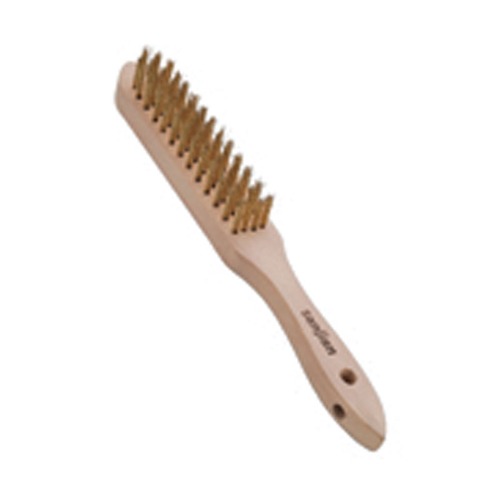
Brass wire has characteristics that make it useful for certain cleaning tasks where a steel wire brush may be unnecessarily aggressive. It is relatively soft compared with steel wire, so it can provide a gentler brushing action on suitable surfaces.
A Brass Wire Brush For Rust can be considered when the purpose is to remove loose rust, dirt, oxidation residue, or similar deposits while taking care with the underlying material. The exact result still depends on brushing pressure, surface hardness, and the condition of the workpiece.
Brass brushes are often associated with cleaning softer metals and finished surfaces, although the actual compatibility should be checked for each application. A brush that seems gentle can still leave marks when pressed heavily against a delicate surface.
The brushing direction and pressure matter here. Light, controlled passes can show how the surface responds. If the rust comes away without excessive effort, there may be little reason to apply stronger pressure. When resistance remains high, changing the brush or cleaning method may be more appropriate than simply pressing harder.
The choice between dry and wet use can also change the working experience. Dry brushing makes it easier to observe the material being removed, while wet brushing can carry away loose residue and reduce airborne particles. After wet cleaning, the brass brush itself should also be rinsed when needed and allowed to dry before storage.
Some situations where a brass brush may be considered include:
- cleaning lightly rusted metal fittings;
- removing surface residue from softer metal components;
- cleaning threads and narrow grooves;
- preparing a surface for further inspection;
- removing loose deposits without aggressive abrasion.
Compatibility remains important. Some metals can react with particular materials under certain conditions, and a finished surface may respond differently from bare metal. A small test area is therefore useful when the surface appearance matters.
The aim is not to make the brushing action as strong as possible. The practical target is enough contact to remove the unwanted material while leaving the underlying surface in a suitable condition for whatever comes next.
How Working Conditions Affect the Choice of Brushing Method
The same rusty component may need a different cleaning approach depending on where the work takes place. A small part on a workshop bench can be handled quite differently from a large structure that cannot easily be moved or rinsed.
Ventilation is an important consideration for dry brushing. Loose rust and surface particles can enter the surrounding air, particularly when a powered brush is used. The operator needs to consider where those particles will go and how the work area will be cleaned afterward.
Wet brushing changes the problem rather than removing it. Airborne dust can be reduced, yet the work area now contains dirty water or cleaning liquid. The liquid needs to be collected or controlled so that it does not spread to nearby equipment, electrical components, or walking areas.
Outdoor work creates another set of conditions. Rain or humidity may already be present, making drying more difficult. A part that is cleaned and then left damp may need additional protection against further corrosion.
Indoor cleaning may provide better control over the environment, although ventilation and residue collection still matter. For small parts, a controlled workbench can make inspection and drying easier. Large components may require a different arrangement because the whole surface cannot be easily moved or rinsed.
The operator should also consider what happens immediately after brushing. If the metal needs to be painted, coated, assembled, or stored, remaining moisture or loose residue can interfere with the next task.
A useful working sequence is:
Assess the surface → choose the brushing method → select the brush → clean in controlled passes → remove residue → inspect the surface → dry or protect the metal.
The sequence can be adjusted according to the material and workplace. It does, however, keep the cleaning process connected to the condition of the finished surface rather than treating brushing as an isolated task.
How Post Cleaning Care Influences Rust Removal Results
Removing visible rust does not mean the work is finished. Small particles can remain in grooves, around fasteners, or along edges after brushing. Moisture can also stay inside narrow spaces where it is difficult to see.
After dry brushing, loose debris should be removed from the workpiece and surrounding area. A suitable cloth, vacuum method, or other cleaning approach can be selected according to the component. The goal is to leave the surface free from loose particles before inspection or further treatment.
Wet brushing requires more attention to drying. Water can remain around joints, threads, holes, and recessed sections even when the main surface looks dry. These areas should be checked carefully.
The condition of the cleaned surface should then be assessed. Useful observations include:
- whether loose rust has been removed;
- whether firmly attached corrosion remains;
- whether the underlying metal has visible damage;
- whether the original surface finish has changed;
- whether moisture or cleaning residue remains.
Further treatment depends on the intended use of the part. Some components may need a protective coating, while others may simply need to remain dry before assembly or storage. The correct approach depends on the material and operating environment.
The brush also needs attention after use. Rust particles and other debris can remain trapped between bristles. Cleaning the tool can help prevent those particles from being transferred to another workpiece.
Storage conditions matter as well. A wet brush should not simply be placed in a closed container where moisture can remain around the wires. Allowing the tool to dry and keeping it away from unnecessary contamination can help maintain a predictable brushing condition for later work.
Both dry and wet methods can therefore be useful for rust removal, yet neither should be selected without considering the complete job. Surface condition, brush material, workplace conditions, operator access, and post‑cleaning care all influence the final result.
A Wire Brush Cleaning Tool provides the mechanical contact needed to remove unwanted surface material, while the choice between dry and wet brushing determines how that contact takes place. A Brass Wire Brush For Rust can offer a gentler option for suitable surfaces, particularly where aggressive brushing could affect the underlying material.
The practical approach is to match the method and brush to the metal, the rust condition, and the work environment. Careful handling during cleaning and proper treatment afterward help keep the surface ready for its next use.

-
 +86-13906791151
-
 sales@sanjiantools.com
-
 No.1 Xinggong Road, Huangzhai Town, Pujiang County, Zhejiang Province, China


Client
Copyright © Zhejiang Pujiang Sanjian Tools Co., Ltd. All Rights  浙公网安备33072602100309号
Reserved.
浙公网安备33072602100309号
Reserved.

Construction Paint Tools Factory