 sales@sanjiantools.com


 中文简体
中文简体 Deutsch
 Español
Brass Wire Brush Cleaning Guide
When metalworkers in workshops or technicians in automotive repair settings discuss the Brass Wire Brush, the conversation often centers on several specific performance aspects. These include cleaning efficiency on light rust, suitability for soft metals, spark-free brushing around electrical parts, corrosion resistance in damp working areas, and balanced abrasive performance that preserves surface finishes. Each of these themes influences how people select and use the brush in both industrial and household settings.
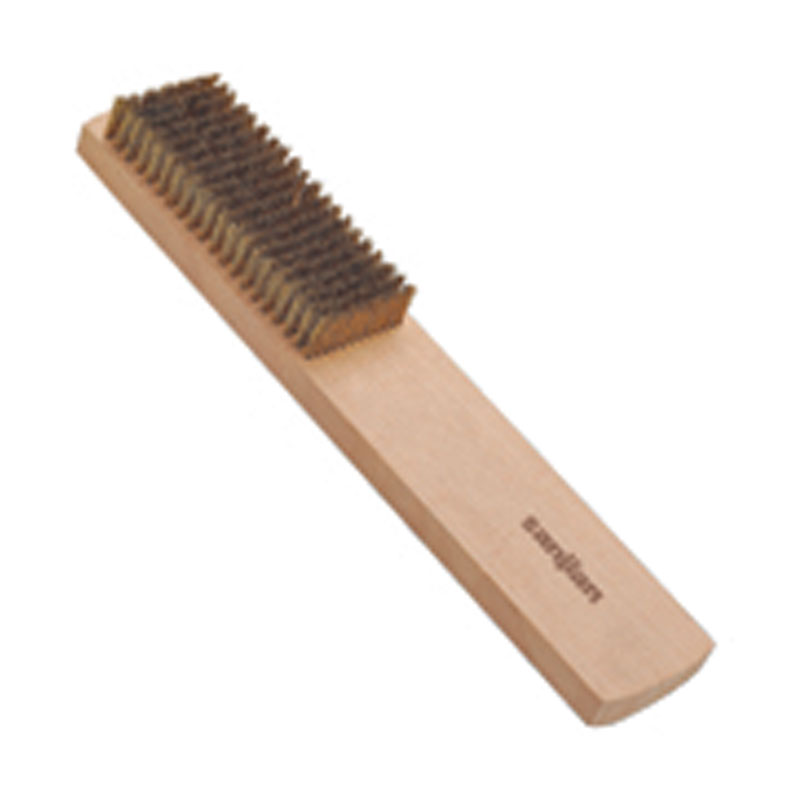
1. Cleaning Rust and Oxidation Efficiently
The brush’s ability to remove surface-level oxidation, tarnish, paint residue, and rust fragments. Instead of cutting into the base metal, the brass bristles work gently to lift corrosion and residue from the surface.
In practice:
- It clears rust film on tools, bolts, and fittings.
- It preps metal before applying coatings or adhesive sealants.
- It assists in restoring parts where appearance still matters.
This application is valued in areas like metal fabrication and routine maintenance, where scratches or gouging could compromise component fit or appearance.
2. Suitable for Soft Metals and Fine Surfaces
A major topic raised repeatedly is how brass compares to steel brushes. Unlike harder steel bristles, brass:
- Maintains decorative finishes on jewelry or metal ornaments.
- Avoids cutting grooves into softer surfaces.
3. Spark-Free Design for Electrical Safety
A widely discussed point is that brass bristles do not typically create sparks during brushing. This allows the brush to be used:
- Around electrical contacts and terminals
- In fuel-related automotive areas
- Near solvent containers or low-ventilation workshops
This spark-free performance makes it a practical choice in environments where additional safety measures are valued. Electricians often use it to clean connectors before installing terminals, reducing the need for aggressive abrasive tools while maintaining control.
4. Corrosion Resistance in Moist and Marine Environments
That brass offers better corrosion resistance than standard carbon steel brushes. This characteristic is appreciated in:
- Boat maintenance and marine fittings
- Dock equipment cleaning
- Outdoor metalwork exposed to humidity
Brass maintains brush integrity longer in moisture-rich environments, reducing tool replacement frequency and simplifying maintenance routines.
5. Balanced Abrasion for Controlled Surface Preparation
The softness of brass allows controlled abrasion, which is especially useful when preparing surfaces before welding, plating, painting, or bonding.
- The brush clears contaminants without altering surface geometry
- Edges are preserved without rounding
- Protective coatings adhere more consistently after brushing
Metal fabricators appreciate this because applying coatings onto uneven or scratched surfaces can reduce durability.
6. Proper Safety and Usage Techniques
- Apply moderate pressure, not forceful scrubbing
- Use protective glasses and gloves due to fine debris
- Brush in a directional motion instead of circular scraping
- Store the tool dry to extend service life
These user-supplied guidelines help maintain consistent performance and ensure safe workplace handling.
7. Application Fields with Strong Practical Value
The brush has found persistent utility across different fields:
- Automotive part cleaning and thread maintenance
- Jewelry refinishing and decorative metal polishing
- Electrical system servicing
- Marine hardware brushing
- Outdoor furniture repairs involving metal fasteners
- Fabrication workshops before paint or weld operations
These scenarios demonstrate why the brush stays relevant across both light industrial and do-it-yourself use.
The Brass Wire Brush ultimately earns recognition not from fanfare, but from consistent, reliable results across a variety of working conditions. Its gentle bristle nature, spark-limiting property, corrosion resistance, and suitability for soft metals continue to make it a practical tool across repair, restoration, and fabrication tasks. For buyers seeking dependable cleaning and preparation support, the Brass Wire Brush offers a well-balanced solution.

-
 +86-13906791151
-
 sales@sanjiantools.com
-
 No.1 Xinggong Road, Huangzhai Town, Pujiang County, Zhejiang Province, China


Client
Copyright © Zhejiang Pujiang Sanjian Tools Co., Ltd. All Rights  浙公网安备33072602100309号
Reserved.
浙公网安备33072602100309号
Reserved.

Construction Paint Tools Factory