 sales@sanjiantools.com


 中文简体
中文简体 Deutsch
 Español
Putty Knife Maintenance Guide
When professionals and homeowners pick up a Putty Knife, they expect a dependable tool — one capable of handling both filling and removal tasks with precision. This seemingly simple tool is central to many renovation, repair, and finishing projects, and its widespread utility stems from a few key performance aspects that repeatedly come up in user discussions and job-site feedback.
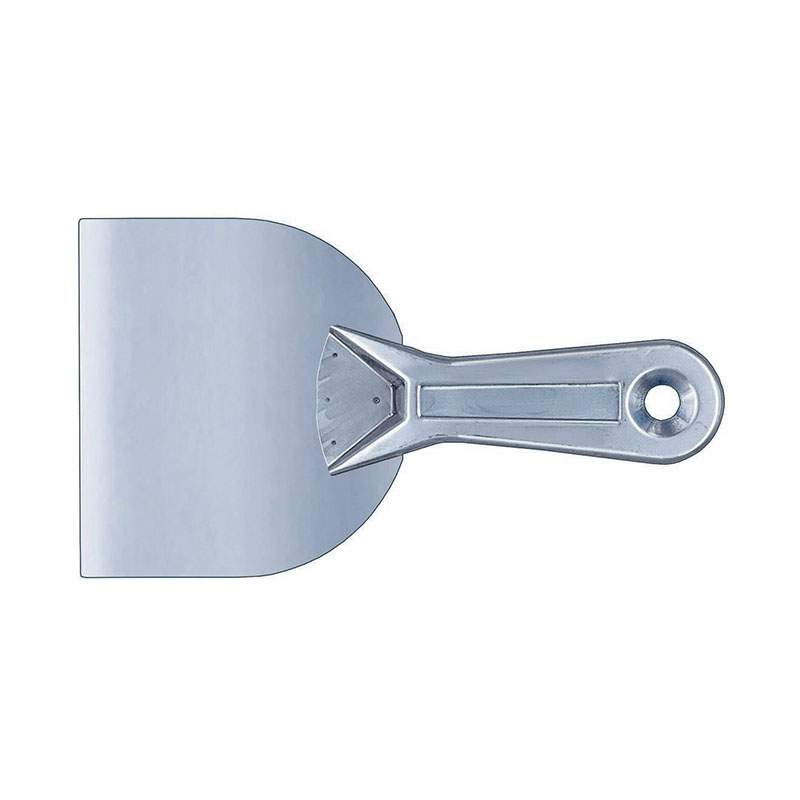
One of the main advantages of a Putty Knife is its multi-functionality. On one hand, it is widely used for filling cracks, holes, and dents — whether in drywall, wood furniture, trim, or wall panels — with spackle, wood filler, or joint compound. The flat, often flexible blade allows users to spread material evenly, press filler into crevices, and smooth the surface to prepare for sanding or painting. On the other hand, a Putty Knife can serve as a scraper, removing old paint flaking from wood or plaster walls, cleaning off adhesive or caulk residue, or stripping wallpaper paste before repainting or refinishing — tasks that would otherwise need heavier or more specialized tools.
The choice of blade type is another commonly discussed factor. Flexible-bladed knives — thinner and more springy — are preferred for spreading filler or compound, where subtle pressure and smooth movement yield better results. Stiffer, scraper-style knives excel at chipping away hardened material: old paint, dried caulk, or stubborn debris. Many renovation experts recommend owning at least two variants: one flexible blade for filling and finishing work, and one stiff blade for removal and clean-up.
Material and build quality also matter. Stainless steel blades are often praised for their corrosion resistance, ease of cleaning, and long-term durability — particularly important in humid environments or when working with wet plaster or chemicals. Carbon-steel alternatives may offer sharper edges or increased rigidity, but they tend to require more maintenance to avoid rust. Proper handling and storage after use — cleaning off leftover compound and drying the blade — helps prolong tool life and maintain performance.
The width of the blade plays a practical role, too. Narrow blades (about 1–2 inches) give fine control for small patched areas, narrow holes, or corners. Mid-width to wide blades (3–4 inches or more) cover larger wall patches or are used when smoothing broader surfaces for a seamless finish before painting. The right blade width ensures better coverage and more consistent surface results, especially when preparing drywall or woodwork over larger areas.
Yet, results depend heavily on proper technique. Users repeatedly note that overfilling, pressing too hard, or using a steep blade angle can cause uneven filler distribution — often leaving the top part of a hole under-filled. A common workaround is to slightly overfill, then use the knife edge nearly flat to the surface to spread, followed by a second pass at a shallower angle to wipe off excess. This approach helps minimize sanding later and yields smoother surfaces ready for finishing.
Because of this versatility, many who work in interior renovation, furniture restoration, drywall repair, or window glazing — even small-scale DIY projects — rely on the Putty Knife rather than switching tools. Whether repairing wall damage, refinishing old furniture, removing loose paint before repainting, or sealing window panes, this simple tool finds frequent use.
For companies or individual buyers needing consistent supply or bulk orders, it is useful to note that Putty Knife models range widely: from flexible stainless-steel blade knives sized 1.2″ to 6″, to wider, stiffer scrapers for heavy-duty removal work, with various handle materials (wood, plastic, ergonomic grips) depending on user comfort and intended use.
Ultimately, the Putty Knife remains a foundational tool for maintenance, renovation, and finishing work. Its balance of filling and scraping capabilities, flexibility in blade type, and adaptability to many tasks make it a practical choice for both professionals and DIYers.

-
 +86-13906791151
-
 sales@sanjiantools.com
-
 No.1 Xinggong Road, Huangzhai Town, Pujiang County, Zhejiang Province, China


Client
Copyright © Zhejiang Pujiang Sanjian Tools Co., Ltd. All Rights  浙公网安备33072602100309号
Reserved.
浙公网安备33072602100309号
Reserved.

Construction Paint Tools Factory