 sales@sanjiantools.com


 中文简体
中文简体 Deutsch
 Español
The Essential Guide to Steel Wire Brushes
Understanding Steel Wire Brush Construction
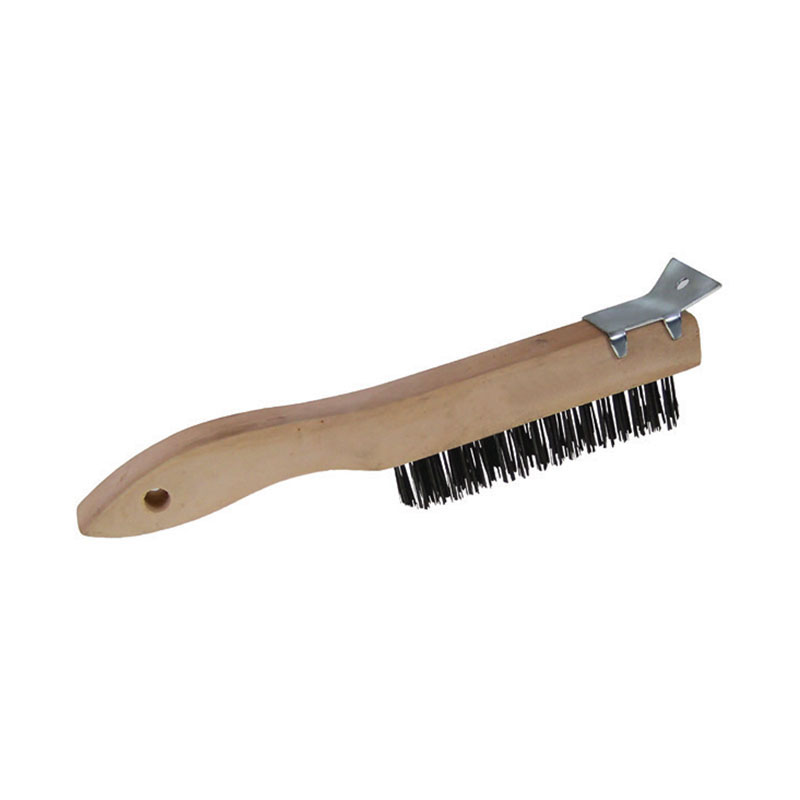
A steel wire brush is fundamentally an abrasive tool designed for surface preparation, cleaning, and finishing applications across numerous industries. The construction typically consists of a handle made from wood, plastic, or metal, with bristles formed from various grades of steel wire embedded into a block or twisted into place. The wire itself can be straight or crimped, with crimped wires often providing more aggressive action due to their ability to hold cleaning compounds and maintain consistent contact with surfaces. The density of bristles, measured by the number of wire tufts, determines how aggressively the brush will cut into materials during use.
Carbon Steel Wire Applications
Carbon steel wire brushes represent the common and economical option for demanding cleaning tasks. These brushes excel at removing rust, scale, and old paint from iron and steel surfaces where aggressive action is required. The hardness of carbon steel bristles allows them to bite into corrosion effectively without excessive pressure from the operator. However, users must understand that carbon steel brushes can leave microscopic particles on surfaces, which may cause rust formation if not properly cleaned after use. This characteristic makes them unsuitable for stainless steel or aluminum applications where cross-contamination would cause corrosion problems.
Stainless Steel Wire Advantages
For applications requiring corrosion resistance or working with non-ferrous metals, stainless steel wire brushes provide the appropriate solution. A steel wire brush with stainless bristles will not leave behind particles that rust, making them ideal for cleaning stainless steel equipment in food processing, marine environments, and architectural metalwork. The chromium content in stainless steel wire provides natural corrosion resistance, though these brushes typically cost more than carbon steel alternatives. They work effectively on aluminum, brass, and copper without causing the galvanic corrosion issues that carbon steel particles would create.
Brass-Coated and Specialty Wires
Some applications require brushes with wire that is softer than steel but harder than the material being cleaned. Brass-coated steel wire offers intermediate properties, providing some abrasiveness while reducing the risk of scratching softer base materials. Bronze and brass wire brushes serve specialized purposes in industries where spark prevention is critical, such as in potentially explosive atmospheres. These non-ferrous options generate less friction and significantly reduce sparking risks during use. A carefully selected steel wire brush with appropriate wire material ensures both effective cleaning and protection of the underlying surface.
Brush Configurations and Their Uses
Manufacturers produce steel wire brushes in numerous configurations tailored to specific applications:
- Hand brushes feature short handles for controlled, detailed work and come in various shapes including straight, curved, and angled designs. The bristle patterns may be arranged in narrow strips for getting into tight spaces or wide blocks for covering larger areas quickly.
- Wire wheel brushes mount on bench grinders or angle grinders for rapid material removal. These wheels spin at high speeds, with the wire tips striking surfaces thousands of times per minute to knock off rust, paint, or weld slag efficiently.
- Cup brushes attach to angle grinders and provide coverage on flat surfaces. The cup shape contains the wire ends, directing their action downward onto the workpiece while containing debris within the cup area.
- End brushes feature wire bristles at the tip only, making them ideal for cleaning inside holes, tubes, and confined spaces where other brush types cannot reach. Their cylindrical shape allows insertion into openings for internal cleaning.
Wire Gauge and Stiffness Selection
The thickness of individual wire strands significantly affects brush performance. Coarse, heavy-gauge wire provides aggressive cutting action for heavy rust and scale removal but may leave visible scratch patterns on softer materials. Fine wire gauges produce smoother finishes suitable for cleaning delicate components or preparing surfaces for painting where deep scratches would be undesirable. A versatile steel wire brush selection includes multiple wire gauges matched to specific project requirements.
Safety Considerations During Use
Operating steel wire brushes presents several hazards requiring proper precautions. Wire bristles can break during use and become projectiles traveling at high speed. Protective eyewear is absolutely essential whenever using power-driven wire brushes. Fragments may also embed in skin, requiring careful removal to prevent infection.

-
 +86-13906791151
-
 sales@sanjiantools.com
-
 No.1 Xinggong Road, Huangzhai Town, Pujiang County, Zhejiang Province, China


Client
Copyright © Zhejiang Pujiang Sanjian Tools Co., Ltd. All Rights  浙公网安备33072602100309号
Reserved.
浙公网安备33072602100309号
Reserved.

Construction Paint Tools Factory