 sales@sanjiantools.com


 中文简体
中文简体 Deutsch
 Español
The Complete Guide to Putty Knives
Understanding Putty Knife Design and Construction
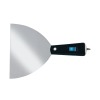
A putty knife appears deceptively simple, yet its design reflects careful engineering for specific tasks. The tool consists of a blade, typically forged or stamped from carbon steel or stainless steel, attached to a handle made from wood, plastic, or rubberized materials. The blade thickness varies considerably, with thinner flexible blades ranging from 0.015 to 0.025 inches for spreading compounds, while thicker stiff blades measuring 0.035 to 0.050 inches serve scraping and prying applications. The blade taper, ground to a gradual wedge shape, determines how effectively the knife slides under materials or spreads compounds smoothly across surfaces. A quality putty knife balances flexibility against stiffness appropriate for its intended use.
Blade Flexibility and Application Matching
The flexibility of any putty knife directly determines which tasks it performs effectively. Flexible blades with significant spring-back excel at spreading spackling compound, joint compound, or wood filler across surfaces. The blade conforms to slight surface irregularities, depositing material evenly while riding over high spots without gouging. Professional drywall finishers select specific flex patterns for different compound applications, with wider blades offering controlled flex for smoothing large areas.
Stiff blades with minimal flex provide the mechanical advantage needed for scraping paint, removing old caulk, or prying loose trim. The rigidity transfers force efficiently from hand to work surface without blade buckling. Window glazing, one of the traditional applications that gave putty knives their name, requires a moderately stiff blade capable of pressing putty into channels while shaping smooth beads.
Blade Width Selection
Putty knives are manufactured in widths ranging from one inch to six inches or more, each serving distinct purposes. Narrow one-inch and one-and-a-half-inch blades access tight spaces around window frames, corner beads, and detailed trim work. These smaller putty knife sizes provide precise control for applying filler in confined areas where accuracy matters more than speed.
Medium widths of two to three inches represent the versatile sizes for general household use. They spread compound efficiently on moderate surfaces while remaining maneuverable enough for detail work. Professional painters and drywall finishers often maintain several medium-width knives for different stages of finishing work.
Wide blades from four to six inches excel at applying joint compound to large drywall areas, smoothing textures, and spreading adhesive for flooring or panel installation. The broader surface covers more area per pass but requires greater skill to maintain consistent pressure across the entire blade.
Steel Types and Finishes
Carbon steel blades dominate the putty knife market due to their ability to take and hold a sharp edge. High-carbon versions with proper heat treatment maintain stiffness while resisting bending during heavy prying tasks. However, carbon steel rusts readily when exposed to moisture, requiring immediate cleaning and drying after use. A well-maintained carbon steel putty knife provides years of reliable service but demands more care than stainless alternatives.
Stainless steel blades cost more but offer complete corrosion resistance, making them ideal for applications involving wet compounds or outdoor use. The chromium content that prevents rust also affects blade flexibility and edge retention differently than carbon steel. Some professionals prefer stainless for working with water-based compounds that would rust carbon steel quickly between uses.
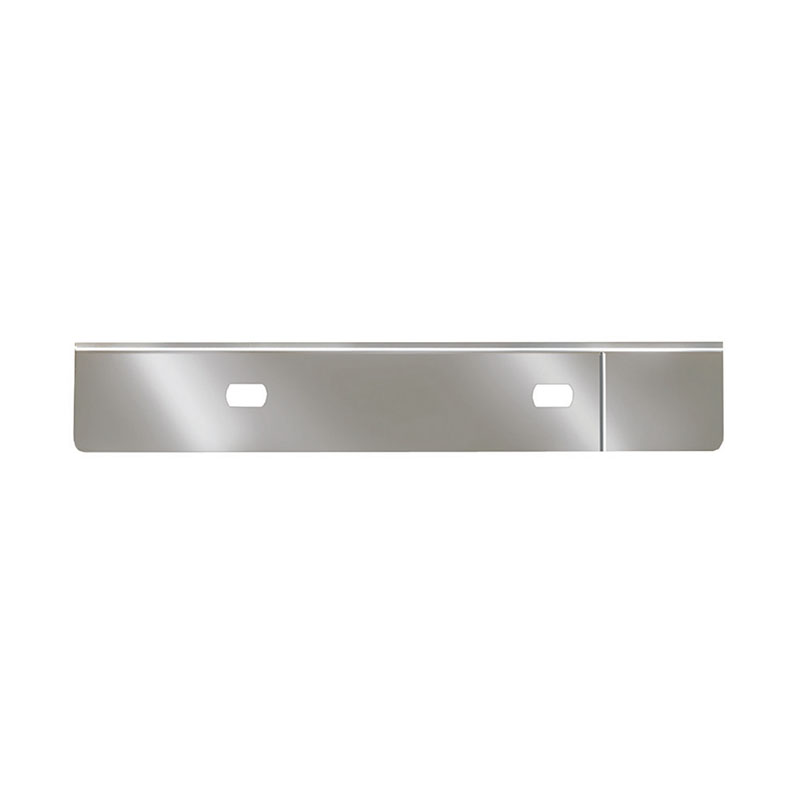
Mirror-polished blades release compounds more easily than satin or matte finishes, reducing drag during spreading and simplifying cleanup. However, polished surfaces show scratches more readily and require careful handling to maintain appearance.
Handle Ergonomics and Materials
The handle of any putty knife significantly affects user comfort during extended use. Wood handles, traditionally made from hardwood with lacquer or varnish finishes, provide classic appearance and good grip when dry. However, they become slippery when wet and can absorb moisture from compounds, causing deterioration over time.
Plastic handles molded from polypropylene or similar materials offer consistent shape, chemical resistance, and easy cleaning. Textured surfaces or rubberized over-molds provide secure grip even with wet or compound-covered hands. The ergonomic contours on premium knives reduce hand fatigue during prolonged finishing work.
Handle design also affects force transmission. Wide, contoured handles distribute pressure across larger hand areas for scraping and prying. Slimmer profiles provide better control for detailed spreading applications where precision outweighs power.

-
 +86-13906791151
-
 sales@sanjiantools.com
-
 No.1 Xinggong Road, Huangzhai Town, Pujiang County, Zhejiang Province, China


Client
Copyright © Zhejiang Pujiang Sanjian Tools Co., Ltd. All Rights  浙公网安备33072602100309号
Reserved.
浙公网安备33072602100309号
Reserved.

Construction Paint Tools Factory