 sales@sanjiantools.com


 中文简体
 Deutsch
 Español
Which Putty Knife Types Work Best for High-Volume Construction Projects
On a large construction site, putty knives are used for far more than filling small holes. Workers spread joint compound across drywall seams, smooth plaster, remove old coatings and repair damaged surfaces. Using the wrong blade can slow down the job or leave an uneven finish, especially when the same task is repeated across dozens of rooms.
Contractors purchasing tools in bulk need to consider blade width, stiffness, material and handle construction. Different Putty Knife Types serve different purposes, and supplying workers with a suitable combination is usually more practical than choosing one design for every job.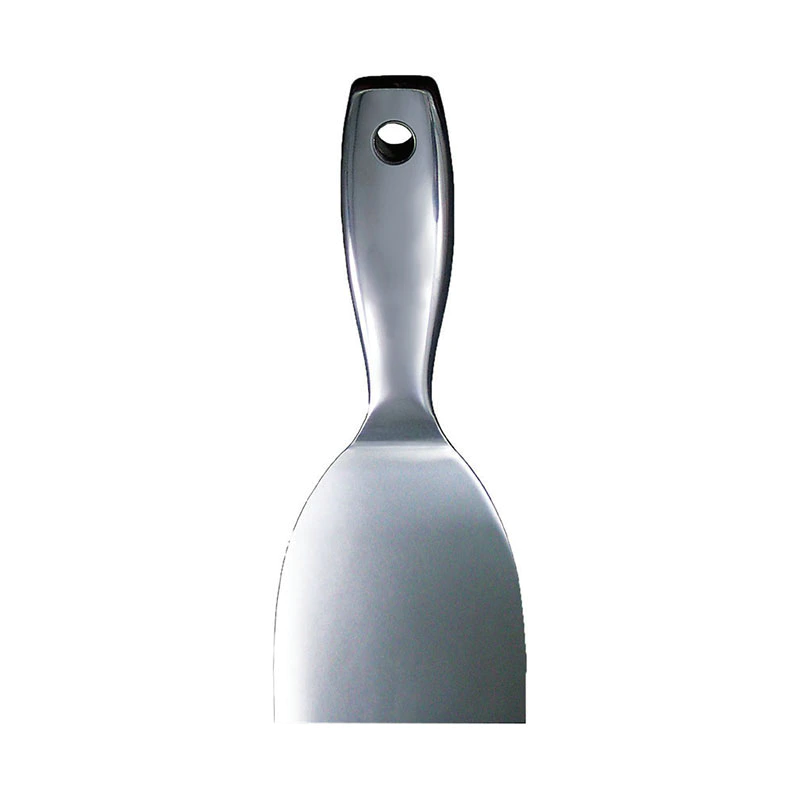
Why Tool Selection Makes a Difference on Large Sites
A narrow blade takes longer to cover a wide drywall joint, while an overly wide blade can be awkward when repairing small defects. Flexibility creates a similar trade-off: a flexible blade spreads compound smoothly, but it is less suitable for scraping hardened material.
Repeated daily use also exposes weaknesses that may not be obvious when inspecting a new tool. Blades can bend, handles may loosen, and poorly protected steel can develop rust.
For construction companies, these problems mean more than replacing inexpensive tools. Workers may need to stop, change equipment or repeat sections of unfinished work.
Four Common Putty Knife Types
Flexible putty knives
Flexible blades are mainly used for spreading lightweight fillers, applying joint compound and smoothing minor surface imperfections. Their ability to bend slightly under pressure helps distribute material without leaving pronounced ridges.
They are particularly useful during drywall finishing, where a consistent surface is more important than scraping strength.
Stiff putty knives
A stiff blade resists bending and handles more demanding work. Contractors often use these knives to remove old paint, scrape hardened compound, clean surfaces and apply thicker fillers.
They are less suitable for fine finishing when a smooth, flexible stroke is required.
Wide putty knives
Wide blades cover more surface with each pass. Sizes such as 6, 8, 10 and 12 inches are commonly used for spreading compound across drywall joints and larger repaired areas.
Their larger working surface can reduce the number of strokes needed, although they require sufficient space and operator control.
Narrow putty knives
Blades around 1–3 inches wide are useful for filling nail holes, small cracks and confined areas. They also provide better access around fixtures, corners and other details where a wide blade becomes difficult to handle.
Blade Materials: Stainless Steel or Carbon Steel?
Material selection affects how a putty knife responds to repeated pressure, moisture and cleaning.
Stainless steel is a common option for general construction and finishing work. It resists corrosion better than ordinary carbon steel and can be cleaned easily after contact with wet compounds.
Carbon steel offers good strength and working-edge performance, making it useful for scraping and heavier applications. Its main disadvantage is its greater susceptibility to rust. High-carbon steel can provide additional hardness and stiffness, although its performance depends on heat treatment and blade thickness.
| Blade material | Main advantages | Potential limitations | Suitable applications |
|---|---|---|---|
| Stainless steel | Corrosion resistance and easy cleaning | Quality varies by grade | General construction and finishing |
| Carbon steel | Strength and good working-edge performance | More susceptible to rust | Scraping and heavy-duty work |
| High-carbon steel | Good stiffness and wear resistance | Requires corrosion protection | Repeated demanding tasks |
| Flexible stainless steel | Controlled spreading and smooth finishing | Less suitable for heavy scraping | Drywall finishing and fillers |
For bulk orders, consistency between blades matters just as much as the material specification. Noticeable differences in thickness or flexibility can make it harder for workers to achieve the same finish across a project.
Match Blade Width and Flexibility to the Work
Blade width should follow the task rather than the purchasing preference of an individual worker.
| Blade width | Common uses |
|---|---|
| 1–3 inches | Nail holes, small cracks and detailed repairs |
| 4–6 inches | General filling, patching and medium-sized repairs |
| 8–12 inches | Spreading compound over wider drywall areas |
Flexibility needs equal attention. A flexible blade is easier to control when spreading compound in thin, even layers. A stiff blade is more useful when removing hardened material or working against a resistant surface.
A construction team will often need several sizes and stiffness levels. For example, a worker preparing a wall may use a stiff narrow knife for removing loose material, then switch to a wider flexible blade for applying and smoothing compound.
Don't Overlook the Handle
Handle design becomes important when workers use the same tool throughout a shift. An uncomfortable grip can make repeated spreading and scraping more tiring.
Plastic handles are lightweight and easy to clean. Rubberized handles offer additional grip, particularly when hands are dusty or slightly wet. Wooden handles provide a traditional feel, although their durability depends on the finish and construction.
Pay particular attention to the connection between the handle and blade. A loose joint can affect control and eventually make the tool unusable. Handle balance, grip shape and resistance to cleaning agents are also worth checking when comparing samples.
What to Inspect Before Placing a Bulk Order
Unit price alone gives little indication of how well a putty knife will perform over a construction project. Buyers should compare workmanship and supply reliability as well.
| Purchasing factor | What to inspect | Why it matters |
|---|---|---|
| Blade quality | Material grade, thickness and flexibility | Helps maintain consistent application |
| Handle construction | Grip comfort and connection strength | Reduces handling problems |
| Corrosion resistance | Surface treatment and cleaning compatibility | Helps extend service life |
| Product consistency | Dimensional and material tolerances | Makes tools more consistent across teams |
| Bulk availability | Production capacity and delivery schedule | Prevents supply interruptions |
| Packaging | Protection against bending and corrosion | Reduces transport damage |
Requesting samples before ordering is particularly useful. Workers can test blade flexibility, check handle comfort and judge how easily compound can be spread or removed. These practical checks often reveal differences that a product specification cannot show.
Keep Tool Specifications Consistent Across Teams
When several crews work on the same project, using a defined range of blade sizes makes procurement and tool replacement easier. Contractors can allocate narrow knives for repairs, wider models for drywall finishing and stiff blades for surface preparation.
Inspection should not be overlooked after purchase. Bent blades, rust, damaged edges and loose handles are reasons to replace a tool. Cleaning away compound after use and storing knives in dry conditions also helps prevent premature deterioration.
The useful Putty Knife Types for a large construction project are not necessarily expensive or versatile. A practical combination of flexible and stiff blades, different widths and durable handles gives workers the tools needed for each stage of the job.

-
 +86-13906791151
-
 sales@sanjiantools.com
-
 No.1 Xinggong Road, Huangzhai Town, Pujiang County, Zhejiang Province, China


Client
Copyright © Zhejiang Pujiang Sanjian Tools Co., Ltd. All Rights  浙公网安备33072602100309号
Reserved.

Construction Paint Tools Factory