 sales@sanjiantools.com


 中文简体
中文简体 Deutsch
 Español
Floor Brush Remains Essential in Cleaning
The floor brush continues to hold a practical place in cleaning routines across homes, workplaces, and public facilities. Despite changes in cleaning habits and the wider availability of mechanical equipment, this simple tool remains widely used due to its reliability, control, and adaptability. Its presence in everyday maintenance reflects ongoing needs rather than shifting fashions.
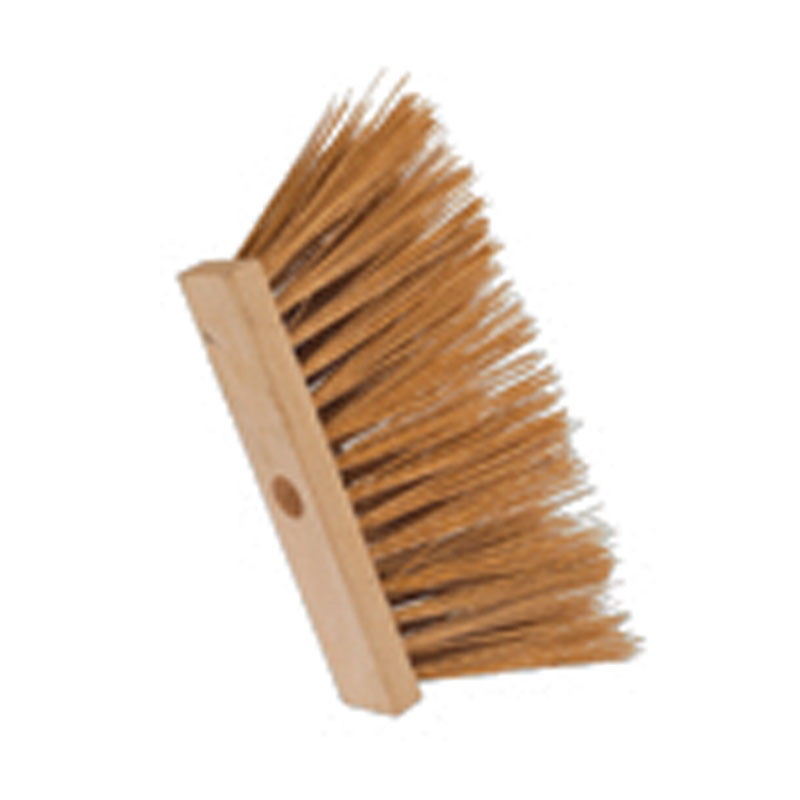
In residential settings, floor brushes are commonly used for targeted cleaning tasks. Bathrooms, kitchens, balconies, and entryways often require scrubbing action that goes beyond what a mop can achieve. Surveys on household cleaning behavior show that more than half of households worldwide still perform manual floor scrubbing several times a month, particularly in areas exposed to moisture or heavy foot traffic. Floor brushes are valued for reaching corners, grout lines, and textured surfaces where dirt can build up over time. For many households, they serve as a supplementary tool used during periodic deep cleaning rather than daily upkeep.
Workplaces and public buildings also rely on floor brushes as part of routine maintenance. Offices, schools, hospitals, and transport facilities frequently combine manual and mechanical cleaning methods. Floor brushes are often used for spot treatment, pre-scrubbing, or cleaning confined areas such as stairwells, restrooms, and service corridors. In environments where precision and control are required, manual scrubbing remains a practical solution.
Public hygiene requirements further support the continued use of floor brushes. In shared spaces, cleaning staff often need tools that allow visible inspection and controlled pressure during cleaning. Manual brushing makes it easier to focus on specific problem areas without affecting surrounding surfaces. This approach is especially common in facilities that operate on strict cleaning schedules and documented procedures.
Another factor shaping the ongoing use of floor brushes is durability. Unlike disposable cleaning items, a well-maintained brush can be used for extended periods. Environmental studies suggest that increasing the lifespan of reusable cleaning tools can reduce household and commercial waste related to cleaning supplies by up to 20% annually. While not every brush is designed with sustainability in mind, the basic concept of reuse aligns with broader efforts to limit unnecessary replacement.
The floor brush has also gained visibility through instructional and educational content. Cleaning guides, training materials, and online demonstrations frequently include manual scrubbing as part of a complete cleaning process. These examples typically focus on practical problem-solving, such as removing stubborn residue after renovations or maintaining high-use areas. This reflects real cleaning needs rather than promotional messaging.
From an economic perspective, manual cleaning tools remain a stable segment within the global cleaning supplies market. The broader category, which includes brushes and similar tools, represents a significant share of total cleaning-related spending worldwide. Demand is supported by ongoing construction, property maintenance, and the need to maintain existing infrastructure.
Overall, the floor brush continues to be used because it solves specific, everyday cleaning tasks. In many cases, it is chosen for areas that need extra pressure, careful control, or manual attention.
FAQ
What surfaces are suitable for a floor brush?
Floor brushes are commonly used on tile, stone, concrete, and other hard flooring surfaces.
Is a floor brush used only for deep cleaning?
It is mainly used for targeted or periodic cleaning, while lighter daily tasks are often handled by other tools.
Why do facilities still use manual floor brushes?
They allow precise cleaning in small or sensitive areas where machines may not be practical.
How long can a floor brush typically be used?
With proper cleaning and drying after use, a floor brush can remain functional for a long period.
Does using a floor brush require electricity or chemicals?
No. It can be used manually and with water or basic cleaning solutions, depending on the task.

-
 +86-13906791151
-
 sales@sanjiantools.com
-
 No.1 Xinggong Road, Huangzhai Town, Pujiang County, Zhejiang Province, China


Client
Copyright © Zhejiang Pujiang Sanjian Tools Co., Ltd. All Rights  浙公网安备33072602100309号
Reserved.
浙公网安备33072602100309号
Reserved.

Construction Paint Tools Factory