 sales@sanjiantools.com


 中文简体
中文简体 Deutsch
 Español
Brass Wire Brush for Precision or Protection?
Brass Wire Brush tools are used in maintenance and restoration tasks where controlled abrasion is required. Compared with steel alternatives, brass brushes have softer bristles, which makes them suitable for delicate surfaces and precision cleaning. They are selected for applications where material protection is important alongside cleaning, such as in soft metals, threaded fittings, or decorative items.
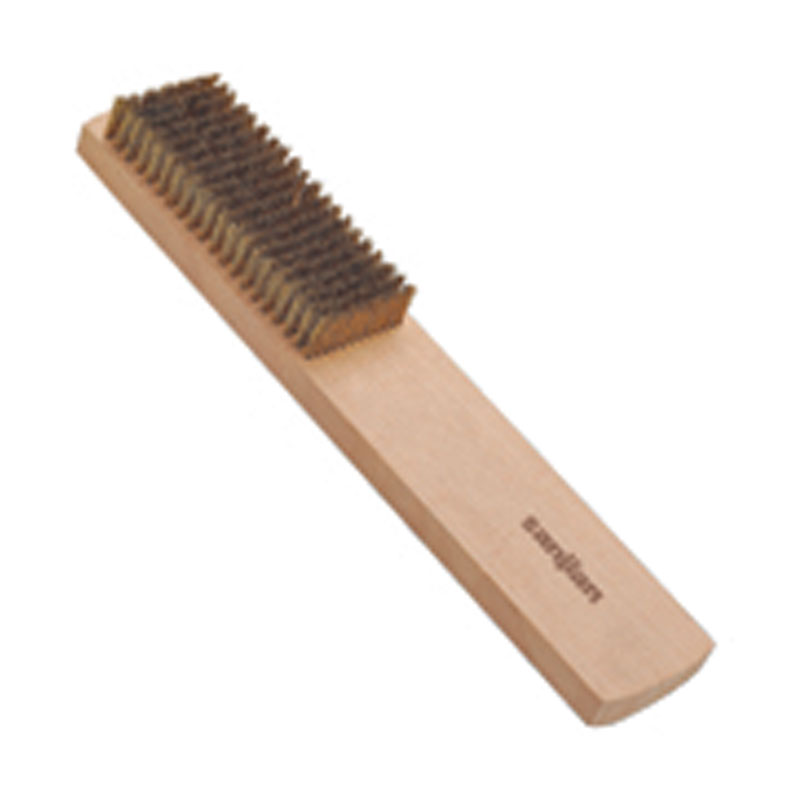
Oxidation, tarnish, and light residue often appear on brass, copper, and aluminum components. Brass Wire Brushes allow users to remove buildup gently while maintaining surface integrity. In electronics, plumbing, and small mechanical assemblies, these brushes clean components without causing deformation, maintaining both function and appearance.
Surface preparation before coating or assembly is another application. Brass brushes are used on fittings, small hardware, and threaded components to remove debris and create an even surface. The soft bristles provide controlled cleaning that supports adhesion for coatings, lubricants, or soldered joints. In restoration projects, such as antique metalwork or precision instruments, brass brushes prevent scratching while creating consistent surfaces.
Durability and repeated use make brass brushes practical for routine maintenance. While softer than steel, they retain effectiveness for light cleaning tasks and can withstand repeated use without significant wear. Some are designed for hand use, while others are compatible with rotary or bench-mounted tools, allowing efficiency when working with multiple parts or detailed components.
Proper handling and safety remain important. Brass brushes generate fewer sparks than steel brushes, which is useful in sensitive environments. Eye protection and gloves are recommended to avoid debris contact and surface scratches. Cleaning the brush after each use maintains bristle flexibility and extends its service life.
Brass Wire Brushes are suitable for both workshop and household tasks. They are used for cleaning brass fixtures, copper pipes, threaded hardware, and small decorative items. In industrial workshops, brushes are applied to light corrosion removal, polishing, surface preparation for coatings, and minor maintenance of tools and machinery. The combination of household and industrial applications shows the tool’s versatility.
Environmental and cost considerations also influence the selection of brass brushes. Reusable brushes reduce dependence on disposable abrasive pads and chemical cleaners. Controlled abrasion limits material loss, which can extend the life of components and reduce replacement frequency.
The continued use of Brass Wire Brush tools shows the importance of matching tool hardness to the task. By providing controlled cleaning with minimal surface damage, brass brushes support careful handling, precise cleaning, and durability. Their range of applications, from industrial maintenance to household restoration, keeps the Brass Wire Brush relevant in maintenance work.
FAQ
Q1: When is a Brass Wire Brush used instead of steel?
It is selected for soft metals, delicate components, or tasks requiring controlled abrasion.
Q2: Can it remove heavy rust or corrosion?
Brass brushes are used for light oxidation, tarnish, and residue rather than heavy rust.
Q3: Is protective equipment necessary?
Yes, eye protection and gloves are recommended to prevent debris contact and scratches.
Q4: Can Brass Wire Brushes be used with power tools?
Yes, many brushes are compatible with rotary or bench-mounted equipment for controlled cleaning.
Q5: How should a Brass Wire Brush be maintained?
Clean after each use, check bristles for bending, and store in a dry place to maintain performance.
Q6: Are Brass Wire Brushes suitable for household tasks?
Yes, they can be used for cleaning brass fixtures, copper pipes, threaded hardware, and decorative items.

-
 +86-13906791151
-
 sales@sanjiantools.com
-
 No.1 Xinggong Road, Huangzhai Town, Pujiang County, Zhejiang Province, China


Client
Copyright © Zhejiang Pujiang Sanjian Tools Co., Ltd. All Rights  浙公网安备33072602100309号
Reserved.
浙公网安备33072602100309号
Reserved.

Construction Paint Tools Factory